
TL;DR:
- Local content marketing boosts neighborhood businesses through community-focused ideas that build trust and drive traffic. Using platforms like Google Business Profile and Pinterest alongside social media enhances reach and engagement effectively. Consistent posting of genuine stories, customer highlights, and local events fosters loyalty better than polished advertising.
Local content marketing is the practice of creating platform-specific, community-focused material that drives foot traffic, search visibility, and repeat customers for neighborhood businesses. The best content ideas for local businesses share one trait: they reflect the community back to itself. Generic posts about products fail. Posts about people, places, and shared local experiences build the kind of trust that turns browsers into regulars. This article breaks down the formats, platforms, and schedules that actually move the needle for small business owners in 2026.
1. What content ideas for local businesses work best?
The most effective local content falls into four categories: user-generated content, educational posts, insider truths, and community spotlights. Each serves a different purpose in the trust-building process.

User-generated content is one of the strongest trust signals a local business can publish. A photo of a real customer enjoying your product carries more weight than any polished ad. Ask customers to tag you, then repost their content with a thank-you. This costs nothing and builds credibility fast.
Insider truths and myth-busting posts consistently outperform standard promotional content. Posts that challenge common assumptions or reveal behind-the-scenes realities reach 4.6%–5.2% engagement rates. That is nearly double what a typical sales post earns. A plumber who posts “3 things your contractor won’t tell you about pipe maintenance” will outperform a plumber who posts “Call us for a free quote” every time.
Educational how-to content pulls 3.2%–3.7% engagement and positions your business as the local expert. A bakery that teaches bread-scoring techniques, or a hardware store that explains grout repair, earns repeat visits from people who trust the advice. Educational posts also perform well in search, which extends their lifespan beyond the day they are published.
Pro Tip: Batch your educational posts by theme. Plan one “how-to” topic per week for a month, then film or write all four in a single afternoon. Consistency beats perfection.
Pure problem-agitation posts, the kind that open with “Struggling with X?” and end with a sales pitch, generate only 2.0%–2.8% engagement. Audiences have developed strong resistance to this format. Replace it with a post that solves the problem directly, without the manufactured drama.
| Content type | Typical engagement rate | Best use |
|---|---|---|
| Insider truths and myth-busting | 4.6%–5.2% | Building credibility and shares |
| Educational and how-to posts | 3.2%–3.7% | Trust and search visibility |
| User-generated content | High (varies) | Social proof and community |
| Problem-agitation posts | 2.0%–2.8% | Avoid as primary format |
2. How can local businesses use overlooked platforms for bigger reach?
Most local business owners default to Facebook and Instagram. That instinct is understandable but leaves real reach on the table. Two platforms consistently outperform expectations for local audiences: Pinterest and Google Business Profile.
Pinterest delivers a 7.7% engagement rate for local businesses. That is roughly three times the rate of most other platforms. Pinterest works especially well for businesses with visual products or services: florists, interior designers, restaurants, clothing boutiques, and home service companies. The platform’s search-driven nature means a pin posted today can drive traffic six months from now.
Google Business Profile posts average 4,573 impressions, often surpassing the organic reach of a typical Instagram or Facebook post. Most local business owners ignore this feature entirely. Posting weekly updates, offers, or event announcements directly to your Google Business Profile puts your content in front of people who are already searching for what you sell.
Here is how to adapt your content for each platform:
- Pinterest: Create vertical images (1,000 x 1,500 pixels) with text overlays. Link each pin to a blog post or product page. Use keyword-rich descriptions, not hashtags.
- Google Business Profile: Post short updates (150–300 words) with a clear call to action. Include photos. Update at least once per week to stay active in local search results.
- Facebook Groups: Join neighborhood and community groups as your business page. Contribute genuinely before promoting anything.
- Nextdoor: Claim your business profile and respond to neighbor recommendations. This platform skews hyperlocal and high-intent.
Pro Tip: Repurpose your best blog content as Pinterest pins. A single how-to article can become five separate pins, each targeting a different search phrase.
The digital marketing trends shaping 2026 consistently point toward search-first content strategies. Local businesses that publish on Google Business Profile and Pinterest alongside Facebook gain a compounding advantage over those that rely on a single channel.
3. Which content ideas encourage consistent community engagement?
Community-focused content builds the kind of loyalty that advertising cannot buy. The formats that work best are repeatable, low-cost, and invite participation.
Contests, giveaways, and interactive posts drive engagement more reliably than static promotional content. A simple “Tag a friend who deserves this” giveaway expands your reach to new audiences at zero ad spend. Keep the entry mechanic simple: one action, one winner, one clear deadline.
Customer spotlights are one of the most underused formats in local marketing. Feature a loyal customer once a week with a short story about why they love your business. This creates social proof, gives the featured customer a reason to share the post, and signals to your broader audience that real people trust you. The same approach works for local partner spotlights: feature a neighboring business, and they will almost always return the favor.
Seasonal and locally relevant content performs well because it is timely and specific. A post about the best way to prepare your garden for a local frost, or a guide to the best spots to watch the town’s Fourth of July parade, connects your brand to the community calendar. This type of content is genuinely useful and gets saved and shared more than generic posts.
Authenticity is the only content strategy that compounds over time. A local business that shows up consistently, shares real stories, and celebrates its community builds an audience that no algorithm change can take away.
Live updates from local events, festivals, or charity drives create real-time engagement. Post a short video from the farmers market where you have a booth. Share a photo from the school fundraiser you sponsored. These posts show that your business is woven into the fabric of the neighborhood, not just operating within it.
4. What posting frequency and schedule work for local businesses?
Posting frequency has a direct and measurable impact on reach. Only 11% of local businesses post daily, yet those businesses capture a disproportionately higher share of monthly impressions. The majority of local businesses post three days per week, which is a reasonable floor but not a ceiling.
The 50/30/20 rule is a practical framework for local content calendars. Fifty percent of posts should be educational or community-focused. Thirty percent should be engagement-driven: polls, questions, contests, and shares. Twenty percent can be promotional. This ratio prevents the “sales fatigue” that causes audiences to mute or unfollow a business page.
| Content mix category | Share of posts | Examples |
|---|---|---|
| Educational and community | 50% | How-to guides, local tips, event coverage |
| Engagement-driven | 30% | Polls, giveaways, customer spotlights |
| Promotional | 20% | Product launches, offers, service announcements |
Sustaining a consistent schedule requires a content calendar. Plan one month at a time. Assign content themes to each week: week one for education, week two for community, week three for engagement, week four for promotion. This structure removes the daily decision of “what should I post today?” and prevents the all-too-common pattern of posting in bursts followed by long silences.
Pro Tip: Use a free scheduling tool like Meta Business Suite or Google’s built-in scheduling for Business Profile posts. Batch-schedule two weeks of content in one sitting, then spend the rest of your time engaging with comments.
The social media posting guide from Mysearchhero breaks down platform-specific timing recommendations for local businesses. Posting at the right time of day compounds the effect of posting at the right frequency.
For businesses that want to go deeper on content promotion strategies, the key is distributing each piece of content across multiple channels rather than creating unique content for every platform. One blog post becomes a Pinterest pin, a Google Business Profile update, a Facebook post, and a short video script.
Key Takeaways
The most effective local content strategy combines community-focused formats, platform diversity, and a consistent posting schedule built around the 50/30/20 content mix rule.
| Point | Details |
|---|---|
| Prioritize insider and educational content | Myth-busting and how-to posts earn 3.2%–5.2% engagement, far above promotional posts. |
| Use Google Business Profile and Pinterest | GBP posts average 4,573 impressions; Pinterest delivers a 7.7% engagement rate for local businesses. |
| Post daily when possible | Daily posters capture disproportionately higher reach than businesses posting three days per week. |
| Apply the 50/30/20 rule | Split posts into 50% educational, 30% engagement-driven, and 20% promotional to avoid audience fatigue. |
| Feature real people and community moments | Customer spotlights and local event coverage build trust that paid ads cannot replicate. |
What I’ve learned about local content that most guides won’t tell you
Most advice on local content marketing focuses on what to post. The harder problem is why most local businesses stop posting after three weeks.
The real obstacle is not creativity. It is the false belief that every post needs to be polished, original, and perfect. I have seen businesses with genuinely loyal customer bases go silent on social media because the owner felt their phone photos were not “professional enough.” Meanwhile, a competitor with worse products but a consistent stream of candid, real-content posts was capturing all the local search attention.
The businesses that win locally are not the ones with the best graphic design. They are the ones that show up every week without fail, share something real, and treat their online presence as an extension of their in-store personality. A strong local brand identity matters, but it does not require a big budget. It requires consistency and a genuine point of view.
The other thing most guides miss: your best content ideas are already in your building. The question a customer asked you three times this week is a how-to post. The mistake you made and fixed is a behind-the-scenes story. The supplier you love is a partner spotlight. Stop looking for ideas and start documenting what is already happening around you.
— Mike
How Mysearchhero helps local businesses stay consistent
Keeping up with a content calendar while running a business is genuinely hard. Most local business owners know what they should be posting. Finding the time to actually do it is the problem.
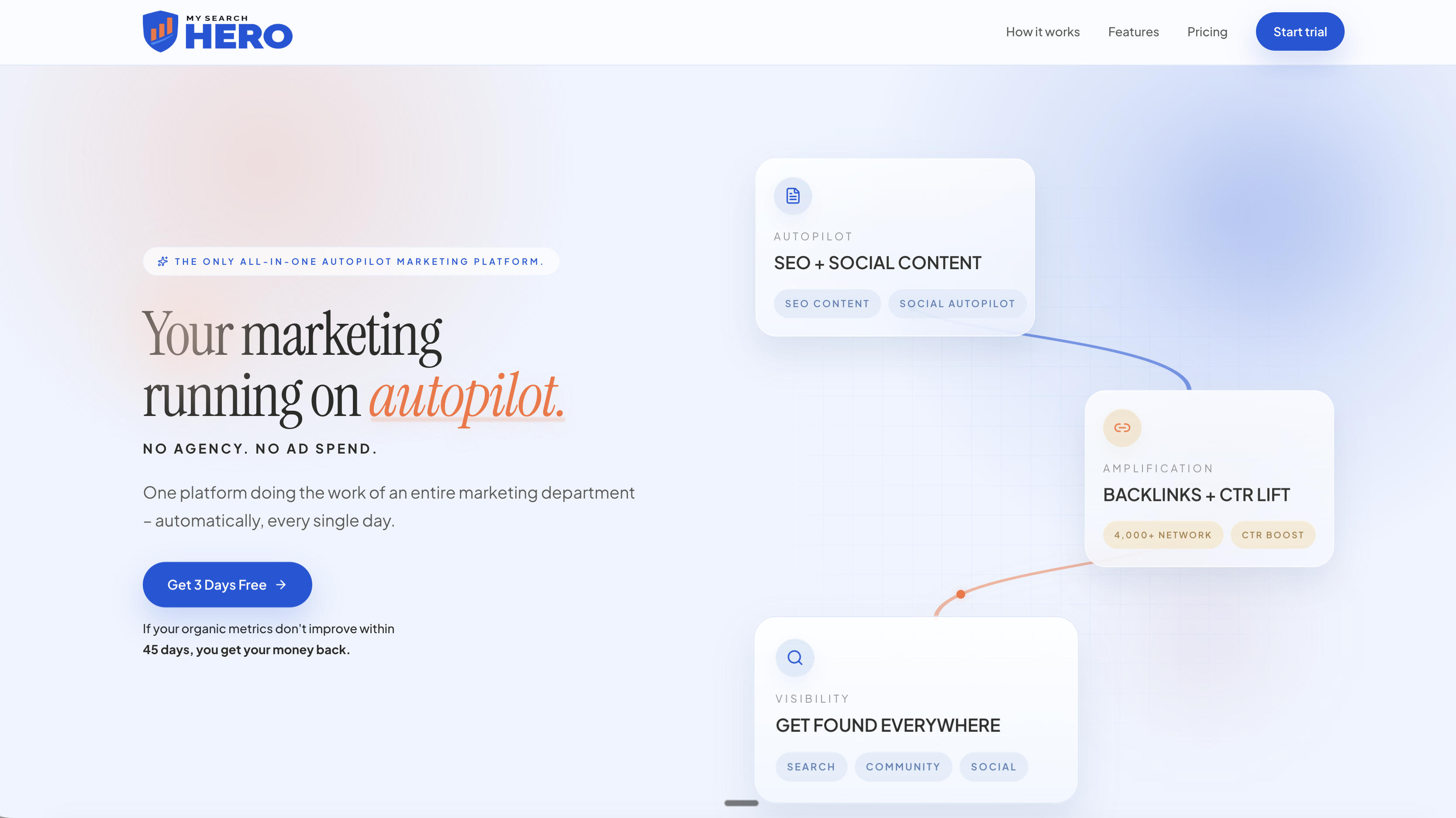
Mysearchhero is a done-for-you content marketing service built specifically for businesses that need consistent output without the overhead of a full marketing team. Each month, subscribers receive published articles, backlinks, Reddit mentions, and social media posts, all pushed out through an automated pipeline. The local marketing strategies covered in this article are exactly what Mysearchhero executes on your behalf, month after month, without you having to manage the process.
FAQ
What types of posts get the most engagement for local businesses?
Insider truth and myth-busting posts generate 4.6%–5.2% engagement, the highest of any content format for local businesses. Educational how-to content follows closely at 3.2%–3.7%.
How often should a local business post on social media?
Posting daily produces the highest reach, though most local businesses post three days per week. A consistent schedule at any frequency outperforms irregular bursts of activity.
Is Google Business Profile worth posting on regularly?
Google Business Profile posts average 4,573 impressions per post, often exceeding the organic reach of Facebook or Instagram. Weekly updates are the minimum recommended cadence.
What is the 50/30/20 rule for local content?
The 50/30/20 rule divides posts into 50% educational or community content, 30% engagement-driven content like polls and giveaways, and 20% promotional content. This mix prevents audience fatigue and maintains consistent engagement.
How does user-generated content help local businesses?
User-generated content builds credibility by showing real customers endorsing your business in their own words and images. It is one of the most cost-effective trust signals available to a local brand.