
TL;DR:
- Backlinks remain a vital SEO factor, especially from relevant, authoritative sites, despite ongoing debates.
- Effective backlink strategies include converting unlinked brand mentions, broken link building, and creating share-worthy content, emphasizing quality over quantity.
Backlinks remain one of the most debated topics in SEO, yet the fundamentals haven’t changed as much as the noise suggests. If you’re trying to figure out how to get backlinks that genuinely move the needle, you’re competing against sites that have been building authority for years. A large-scale Ahrefs analysis confirms that backlinks still correlate with rankings at a Spearman coefficient of 0.248, particularly for high-volume queries. That’s not irrelevant. That’s a signal worth taking seriously. This guide walks you through exactly what to do, from auditing what you already have to running outreach that gets responses.
Table of Contents
- Key takeaways
- How to get backlinks: start with your foundation
- Proven strategies to earn backlinks in 2026
- Finding and prioritizing the right backlink targets
- Measuring results and avoiding costly mistakes
- My honest take on building backlinks sustainably
- Let Mysearchhero handle your backlink building
- FAQ
Key takeaways
| Point | Details |
|---|---|
| Quality beats quantity | One link from a relevant, authoritative site outperforms dozens from unrelated directories. |
| Audit before you outreach | Understand your existing backlink profile before pursuing new links to avoid redundant or harmful patterns. |
| Multiple tactics work together | Combining broken link building, digital PR, and brand mention conversion delivers compounding results. |
| Competitor research is foundational | Reverse-engineering who links to competitors reveals realistic, pre-qualified targets for your own outreach. |
| Track the right metrics | Referring domain growth and organic traffic lift matter more than raw link counts. |
How to get backlinks: start with your foundation
Before sending a single outreach email, you need to know where you stand. Skipping this step is like running paid ads without knowing your conversion rate.
Know your backlink types
Not all backlinks carry equal SEO weight. Here’s what you’re working with:
- Dofollow links pass PageRank and directly influence your rankings. These are the ones you’re primarily after.
- Nofollow links don’t pass PageRank directly but still drive referral traffic and contribute to a natural-looking link profile.
- Sponsored links are tagged when you’ve paid for placement. Google expects this disclosure.
- UGC links appear in user-generated content like forum posts and comments. They carry less weight but can still generate traffic.
A healthy backlink profile contains a mix of these. A profile that’s 100% dofollow from outreach-heavy campaigns looks unnatural and can attract manual review.
Audit your existing backlinks
The Google Search Console links report gives you your top linking domains, most-linked pages, and anchor text distribution at no cost. Start there. Then layer in a paid tool like Ahrefs or SEMrush to get more granular data on domain authority scores, link velocity, and potentially toxic links that could be dragging down your profile.
When auditing, look for pages on your site that already attract links. Those are your linkable assets. Double down on what’s already working before trying to manufacture interest in pages that have never earned organic attention.
Pro Tip: Compare your referring domain count directly against two or three competitors using the same tool. This tells you the realistic gap you’re closing and helps you set goals that aren’t just hopeful guesses.
Proven strategies to earn backlinks in 2026
Once your foundation is set, you can execute with precision. These are the tactics that consistently work.
1. Convert unlinked brand mentions
Someone mentioned your brand in an article but didn’t link to you. That’s a backlink sitting uncollected. Outreach to convert unlinked mentions into links is one of the highest-conversion tactics available because the other site already thinks positively of you. Use Google Alerts or a monitoring tool to catch mentions as they happen. Then send a short, friendly email pointing out the mention and asking if they’d be willing to add a link. Response rates are high because you’re asking for something minimal from someone already in your corner.

For a deeper look at how brand mentions function as trust signals, the Mysearchhero piece on brand mention value explains why this tactic matters beyond just link equity.
2. Broken link building
This tactic works because you’re solving a problem for the site owner. The workflow looks like this:
- Find resource pages or editorial content in your niche using search operators like "“useful resources” + your topic`.
- Run the page through a broken link checker to identify dead outbound links.
- Check if you have existing content that could replace the broken link, or create a replacement.
- Email the site owner, flag the broken link, and suggest your content as a replacement.
Broken link building benefits both sides. The site owner fixes a user experience problem. You earn a relevant, editorial link. Keep the email short and focus entirely on how you’re helping them.
3. Guest blogging with purpose
Guest posting works when it’s done with genuine relevance and not just to collect links. Personalized pitches tailored to the specific publication lead to significantly higher response rates than templated mass outreach. Study the site’s content, identify a gap your expertise can fill, and pitch a specific angle rather than a vague topic area.
Use natural anchor text when you get published. A link from a guest post with forced, keyword-stuffed anchor text can actually hurt more than help. One relevant, naturally placed link per guest post is the right approach.
4. Create link-worthy content assets
Certain content formats attract backlinks passively. Original research with unique data, free tools, and genuinely comprehensive guides earn links because other writers cite them when making a point. If you publish an industry survey or compile statistics that don’t exist elsewhere, you become a primary source that others naturally reference. This is the backlink strategy with the best long-term return on investment, even if it takes longer upfront.

Check out the Mysearchhero guide on effective backlink types for a breakdown of which content formats tend to attract the most authority-building links.
5. Digital PR and media outreach
Digital PR is the top link building tactic according to 48.6% of SEO professionals surveyed in 2025. Creating genuinely newsworthy content, whether that’s a data-driven study, a bold industry prediction, or a timely expert opinion, and then pitching it to journalists and publications earns links from some of the highest-authority domains available. These links are difficult to replicate through any other method.
Pro Tip: Use platforms like Help a Reporter Out (HARO) or similar services to respond to journalist queries in your niche. A quoted expert response can earn you a backlink from a major publication within days.
6. Partner testimonials
Reach out to software, tools, or service providers you genuinely use and offer them a testimonial. Many companies publish customer testimonials on their sites with a link back to the reviewer’s website. This is a fast, ethical way to build backlinks that require no ongoing effort once placed.
Finding and prioritizing the right backlink targets
The average digital marketer wastes significant time pursuing link prospects who will never respond. Prioritization changes that.
Reverse-engineer your competitors
Competitor link profiles reveal exactly which sites are already willing to link to content in your niche. If a site linked to your competitor, they’re likely to link to you too, provided your content is as strong or stronger. Export competitor backlinks from your preferred SEO tool and filter by domain authority and relevance. Then sort out which of those sites actually accept outreach versus which just gave editorial links you can’t replicate.
Use search operators to find opportunities
A few targeted searches will surface dozens of link prospects faster than any tool:
intitle:"resources" + your keyword"submit a guest post" + your niche"write for us" + your topic"link roundup" + your industry
These operators find pages that are actively designed to link out, which makes them the most receptive audience for your outreach.
Evaluate prospects before outreach
Not every site is worth your time. Before reaching out, check these factors:
| Factor | What to look for |
|---|---|
| Domain authority | Aim for sites with a rating of 40 or higher where possible |
| Topical relevance | The linking page should be closely related to your content |
| Link context | Editorial links within body content outperform sidebar or footer links |
| Organic traffic | A site with no traffic can’t send you referral visitors |
Pro Tip: Prioritize sites where your specific page is genuinely useful to their readers. A lower-authority site with a highly relevant audience beats a high-authority site with zero topical overlap.
Personalize your outreach
Generic outreach templates get deleted immediately. Reference a specific article the prospect published, explain why your content would add value to their readers, and make the ask clear without being pushy. Relationship-based outreach, where you comment on their content, share their work, or engage on social media before pitching, consistently outperforms cold email blasts.
Measuring results and avoiding costly mistakes
Building backlinks without tracking results is just spending effort without knowing if it’s working.
Track these metrics consistently:
- Referring domains (growth month over month matters more than total links)
- Domain rating or authority score of new links acquired
- Organic traffic to linked pages to verify links are driving actual ranking changes
- Anchor text distribution to catch over-optimization before it becomes a problem
Avoid these mistakes that regularly derail backlink campaigns:
- Paying for links without disclosure violates Google’s guidelines and risks a manual penalty
- Mass-producing low-quality guest posts on irrelevant sites for links is a pattern Google’s algorithms detect
- Ignoring toxic links from spammy sites that can dilute your profile’s quality signals
Different backlink tactics carry very different cost and timeline profiles. Niche edits run around $80 per link while digital PR placements can cost $2,000 or more. Knowing those benchmarks helps you allocate budget toward methods with the best realistic return.
The shift in 2026 is toward relevance and editorial intent. A link from a genuinely related, well-trafficked site now carries far more weight than ten links from loosely related directories. Quality over quantity is not just advice. It’s how the algorithm works.
My honest take on building backlinks sustainably
I’ve worked with enough sites to know that most backlink problems are actually content problems in disguise. When people struggle to get links, the default instinct is to fix the outreach. But nine times out of ten, the real issue is that there’s nothing on the site worth linking to.
The sites I’ve seen build real authority treat backlink acquisition like a pipeline. You audit your current profile, build deliberate linkable assets, then run targeted outreach to pre-qualified prospects. That process, done consistently, compounds. What I’ve found is that chasing volume with low-effort outreach produces a messy link profile that requires cleanup later and delivers diminishing returns in between.
My other strong opinion: stop optimizing for domain authority as a vanity metric. I’ve seen sites with a DA of 25 outrank sites with a DA of 60 because their link profile was tightly relevant and their content answered the query better. Relevance is the multiplier that makes your links worth more. One link from a niche blog with a loyal audience beats five links from generic web directories every single time.
Stay adaptable. The tactics covered in this guide are working in 2026, but the underlying principle, earning links by creating genuine value and building real relationships, has never changed and isn’t going to.
— Mike
Let Mysearchhero handle your backlink building
If building a consistent backlink pipeline sounds like a significant time investment, that’s because it is. Most business owners and marketing teams don’t have the bandwidth to run audits, build content assets, and execute outreach every single month.
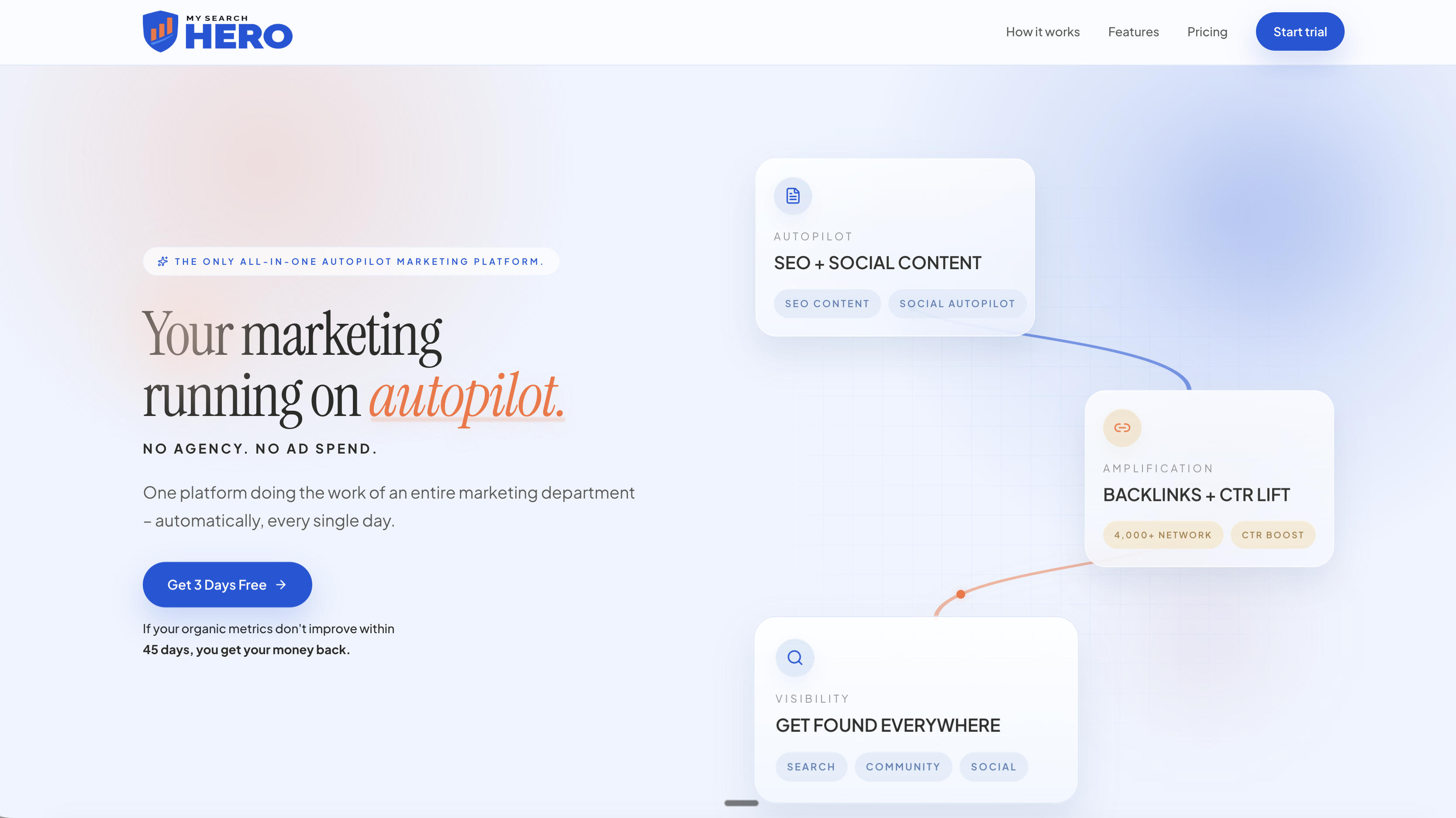
Mysearchhero is a done-for-you SEO and content marketing service that takes this entirely off your plate. Each month, subscribers receive a bundle that includes published articles, authoritative backlinks, Reddit mentions, and social media posts, all delivered through a fully automated pipeline. No chasing freelancers. No wondering if anything went out. Your marketing runs on autopilot while you focus on running your business.
FAQ
What is the fastest way to get backlinks?
Converting unlinked brand mentions into links is one of the quickest methods because the site already knows you. Broken link building also delivers fast results since you’re helping the site owner fix a real problem.
How many backlinks do I need to rank?
There’s no fixed number. What matters more is the relevance and authority of the sites linking to you. A handful of strong, topically relevant links will typically outperform dozens of links from unrelated or low-quality sources.
Are paid backlinks against Google’s guidelines?
Yes. Buying or selling links that pass PageRank without a sponsored tag violates Google’s link spam policies and can result in a manual penalty. Disclosed sponsored links are acceptable, but undisclosed paid links are a significant risk.
How do I check my existing backlinks?
Google Search Console’s links report is the fastest free option. It shows your top linking domains, most-linked pages, and common anchor text patterns. Paid tools like Ahrefs or SEMrush provide more detailed data including authority scores and toxic link flags.
Does guest blogging still work for backlinks?
Yes, when done with genuine relevance and personalized pitches. Mass-produced guest posts on irrelevant sites are a red flag for search engines, but thoughtful contributions to respected publications in your niche remain an effective backlink building strategy.