
TL;DR:
- Backlink outreach involves proactively contacting website owners to earn genuine editorial links that build search engine authority. Effective outreach emphasizes personalization, relevance, and a clear value exchange, avoiding automated schemes and bulk emails. Most successful campaigns rely on follow-ups and targeted prospect research to foster long-term relationships and improve SEO results.
Backlink outreach is defined as the proactive practice of contacting website owners, editors, and content managers to earn editorial links that signal trust and authority to search engines. Explaining backlink outreach clearly matters because the tactic sits at the core of every serious SEO strategy. Google treats editorial backlinks as third-party votes of confidence, and those votes directly influence where your pages rank. In 2026, that logic extends to AI-powered search engines like ChatGPT and Perplexity, which surface brands that appear in trusted, well-linked content. Get the outreach right, and you build authority that compounds over time.
What makes backlink outreach effective?
Outreach link building is defined as proactively connecting with relevant websites to secure editorial links through genuine value exchange rather than automated schemes. That definition rules out paid link networks and mass-blast email tools. It points instead toward a process built on three pillars: personalization, topical relevance, and a clear value proposition.

Personalization goes far beyond inserting a first name into an email template. It means researching the prospect’s recent content, understanding their audience, and referencing something specific that shows you actually read their site. A pitch that opens with “I noticed your article on content audits didn’t mention X” lands differently than one that opens with “I came across your website.”
Topical relevance determines the quality of the link you earn. Pitching irrelevant domains wastes effort and yields poor backlink value because search engines weigh topical authority when evaluating link signals. A backlink from a marketing blog to a marketing tool carries far more weight than the same link from a cooking site.
The value exchange mindset is what separates successful outreach from spam. Backlink outreach is a relationship-building exercise aimed at offering something that makes the prospect’s site better. That something could be a more current statistic, a piece of original research, or a replacement for a broken link. The ask only works when the offer is real.
- Personalization: Reference a specific article, recent update, or content gap on the prospect’s site.
- Relevance: Target sites with topical authority in your niche, not just high domain authority scores.
- Value proposition: Lead with what the prospect gains, not what you want.
- Relationship focus: Think partnership development, not a one-time transaction.
- Editorial fit: Pitch links that genuinely improve the content where they appear.
Pro Tip: Before sending any pitch, ask yourself: “Would this editor thank me for this email?” If the answer is no, rewrite it.
What are the most effective backlink outreach methods in 2026?
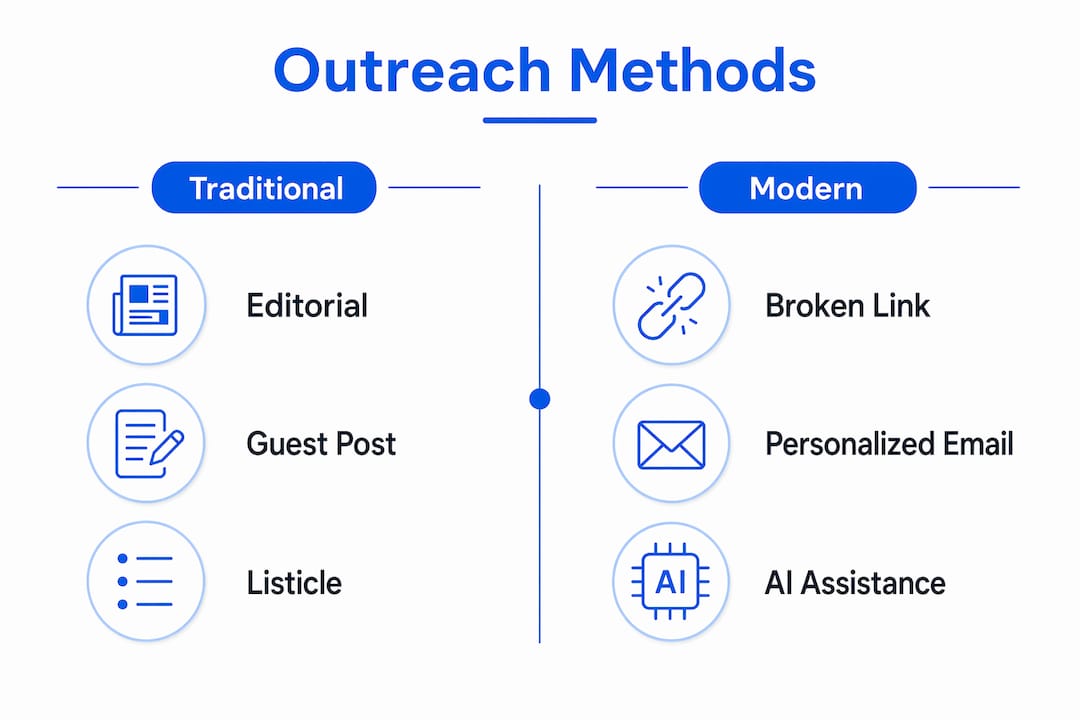
The outreach method you choose shapes every step that follows. Each tactic targets a different type of prospect and requires a different pitch angle. The systematic outreach process that maximizes link acquisition follows five steps: choose a tactic, find prospects, find contact information, send a personalized pitch, and follow up.
The four core outreach tactics
-
Editorial link insertions. You identify a high-traffic article that already ranks well and pitch a link to your content as an addition that improves the piece. This tactic works because the article is already proven. The editor has less risk accepting a relevant addition than publishing something new.
-
Listicle outreach. You pitch your brand or tool for inclusion in “best of” or “top solutions” lists. Placements in listicles are emerging as critical strategies for AI and LLM visibility, because AI-generated answers frequently pull from these curated lists. A spot in a “best SEO tools” article can put your brand in front of ChatGPT users who never visit Google.
-
Guest post outreach. You offer to write a full article for a relevant publication in exchange for an author bio link or a contextual link within the piece. This builds authority and creates a content asset the host site values. It takes more effort but produces links with strong editorial context.
-
Broken link building. You find a dead link on a relevant page and offer your content as a working replacement. Broken link building works because you lead with value by solving a real problem on the prospect’s site. The ask is helpful, not transactional.
Outreach method comparison
| Method | Best for | Effort level | Link quality |
|---|---|---|---|
| Editorial link insertion | Established sites with ranking content | Medium | High |
| Listicle outreach | Brand visibility and AI search presence | Low to medium | High |
| Guest posting | Authority building in new niches | High | Very high |
| Broken link building | Quick wins with a clear value offer | Medium | Medium to high |
Pro Tip: Start with broken link building if you are new to outreach. The value proposition writes itself, and the response rate is higher than cold pitches.
How to craft outreach emails that actually get responses
The email is where most outreach campaigns fail. Good outreach emails use 3–5 sentences, open with immediate value, and avoid burying the ask deep in the message. That structure forces clarity and respects the editor’s time.
Lead with relevance, not flattery. “Your article on technical SEO is great” tells the editor nothing useful. “Your article on technical SEO covers crawl budget well but doesn’t mention log file analysis” tells them you read it and have something to add. That specificity earns attention.
State your value proposition in one sentence. Explain what you are offering and why it helps their readers. Then make the ask clear and easy. Provide the exact URL you want linked, suggest anchor text, and offer to write the surrounding copy if needed. Reducing friction increases the chance of a yes.
- Open with a specific observation about their content, not generic praise.
- State the value in one sentence: what you offer and why their readers benefit.
- Make the ask explicit: include the URL, suggested anchor text, and any supporting copy.
- Keep it short: three to five sentences is the target length.
- Follow up once or twice: most links come from polite follow-ups, not the initial email alone.
The follow-up timing matters. Wait five to seven business days before sending a first follow-up. Keep it brief: one sentence referencing your original email and one sentence reiterating the value. A second follow-up after another five days is acceptable. After that, move on.
Finding the right contact is as important as writing the right email. Generic inbox addresses get ignored. Reaching the actual content editor or site owner greatly improves outreach success. Use LinkedIn, author bylines, and contact pages to identify the person responsible for the content you want to influence.
What common pitfalls should marketers avoid in backlink outreach?
Most outreach campaigns underperform for predictable reasons. Recognizing these mistakes before you launch a campaign saves weeks of wasted effort.
“Link outreach is shifting from bulk, transactional methods to building long-term, trusted relationships with editors and site owners. Sustainable SEO results come from genuine connections and relevant links.” — Orbink, 2026
That shift is real, and ignoring it is the most common mistake. Marketers who treat outreach as a numbers game send hundreds of generic emails and wonder why response rates stay below one percent. The problem is not volume. The problem is that every email reads like it was written for no one in particular.
- Targeting irrelevant sites. A backlink from a site with no topical connection to yours adds little SEO value and signals poor judgment to editors who receive your future pitches.
- Sending generic bulk emails. Template emails without personalization get deleted. Editors receive dozens of pitches weekly and recognize mass outreach immediately.
- Focusing on quantity over quality. Ten links from authoritative, relevant sites outperform one hundred links from low-quality directories.
- Skipping the follow-up. A single email rarely converts. Consistent, polite follow-ups are where most placements actually happen.
- Leading with the ask. The most overlooked pitfall is focusing on the ask rather than the value proposition. Editors prefer outreach that fixes a real problem or fills a genuine content gap.
The relationship-over-transaction mindset also pays dividends beyond a single link. An editor who trusts you will accept future pitches faster, share your content organically, and sometimes reach out to you for contributions. One good relationship can generate multiple placements over time.
Key Takeaways
Effective backlink outreach requires personalization, topical relevance, and a genuine value offer at every stage of the process.
| Point | Details |
|---|---|
| Define outreach correctly | Backlink outreach is proactive, editorial link acquisition through value exchange, not automated schemes. |
| Personalize beyond name tags | Reference specific content gaps or recent articles to show genuine research before pitching. |
| Match tactic to goal | Use listicle outreach for AI search visibility and guest posting for deep authority building. |
| Write short, clear emails | Use 3–5 sentences, lead with value, and make the ask explicit with a URL and anchor suggestion. |
| Follow up consistently | Most placements come from follow-ups, not first emails. Wait five to seven days between each message. |
Why I think most outreach advice misses the point
After years of running link building campaigns, the pattern I see most often is marketers optimizing the wrong variable. They obsess over email open rates and subject line formulas while sending pitches to sites that have no business linking to their content. The targeting problem kills campaigns before the first email lands.
The shift toward AI-driven search engines makes this worse and better at the same time. Worse, because AI tools surface brands from trusted editorial sources, so a weak backlink profile now hurts visibility in two places instead of one. Better, because listicle placements and editorial mentions now carry dual value: traditional ranking signals and AI citation signals. A single well-placed link in a “best tools” article can put your brand in front of audiences who never use a traditional search engine.
My honest advice is to treat your outreach list like a client list. Research each prospect as if you were preparing for a sales call. Know their content, their audience, and the specific gap your link fills. That preparation takes longer, but the conversion rate is dramatically higher. I have seen campaigns with 30 prospects outperform campaigns with 300 because the targeting and personalization were tight. Quality of contact beats volume every time.
Track your campaigns in a simple spreadsheet: prospect name, URL, contact, date sent, follow-up dates, and outcome. Reviewing that data monthly shows you which tactics and niches respond best. Refine from there. Outreach is not a one-time project. It is a repeatable system that gets sharper with every cycle.
— Mike
How Mysearchhero handles backlink outreach for you
Running a consistent outreach campaign takes time that most marketing teams do not have. Researching prospects, writing personalized pitches, tracking follow-ups, and securing placements is a full-time workflow on its own.
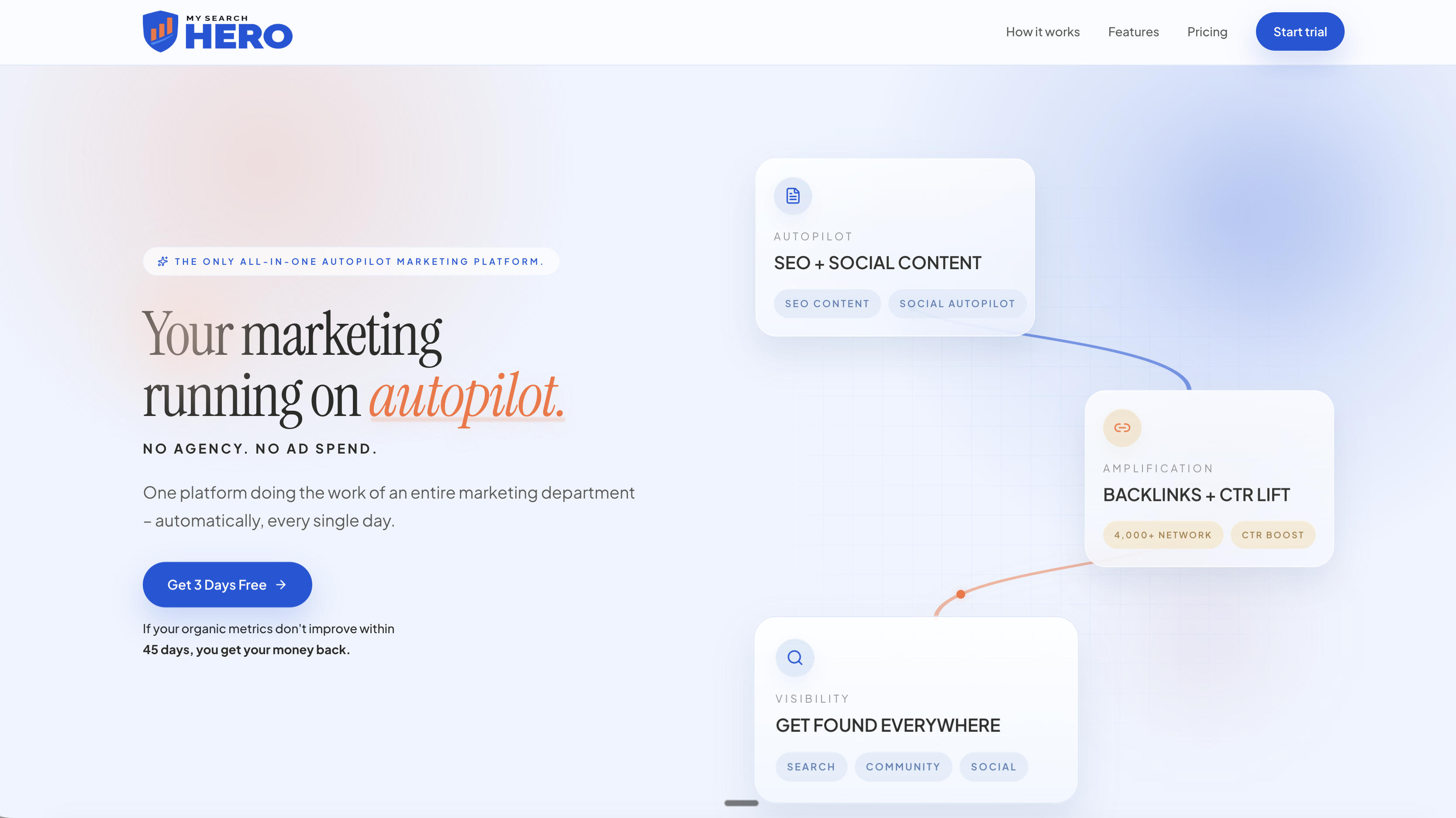
Mysearchhero is a done-for-you SEO and content marketing service that manages this entire process on autopilot. Each month, subscribers receive published articles, quality backlinks, Reddit mentions, and AI-generated social media posts pushed through a fully automated pipeline. The backlink acquisition process follows the same editorial, relationship-based approach described throughout this article. You get the results without managing the workflow. Visit Mysearchhero to see how the service works and what a monthly deliverable package includes.
FAQ
What is backlink outreach?
Backlink outreach is the process of proactively contacting website owners and editors to earn editorial links that improve search engine authority. It relies on personalization, topical relevance, and a clear value offer rather than automated or paid link schemes.
Why does backlink outreach matter for SEO in 2026?
Editorial backlinks remain one of the strongest ranking signals for traditional search engines and increasingly influence visibility in AI-powered tools like ChatGPT and Perplexity. Quality links from relevant, trusted sites compound authority over time.
What are the most effective backlink outreach methods?
Editorial link insertions, listicle placements, guest posting, and broken link building are the four core methods. Listicle outreach is growing in importance specifically for AI search visibility, as AI tools frequently pull brand mentions from curated lists.
How long should a backlink outreach email be?
Effective outreach emails use 3–5 sentences. Open with a specific observation about the prospect’s content, state your value proposition clearly, and make the ask explicit with a URL and suggested anchor text.
How many follow-ups should you send after an outreach email?
Send one to two follow-ups, spaced five to seven business days apart. Most links come from follow-ups rather than the initial email, so consistent and polite persistence is part of the process.