
Marketing on autopilot means letting software and AI handle repeatable campaigns, like welcome emails, review requests, and cart recovery, so your team spends time on strategy instead of manual sends. It’s a good fit if your business has predictable offers and repeat customer touchpoints, but only if you keep clean data and a human checking the output. The FTC still holds you responsible for what automation sends, and services like Mysearchhero exist for owners who want the output without building the system themselves.
TL;DR:
- Automating high-volume, low-risk channels like email and review requests first ensures quick wins and easier troubleshooting before expanding to more complex workflows.
- AI-driven orchestration is evolving toward near real-time content adjustment, but only if the underlying data remains accurate and trustworthy.
- Effective autopilot marketing requires clear ownership, human oversight, and compliance controls to prevent errors, deceptive content, or legal violations.
- Setting up reliable campaigns involves building a single customer data source, thorough testing, and continuous monitoring over a defined measurement window.
- Managed automation services can be cost-effective for small businesses lacking time or technical expertise, but they demand strict vendor controls and outcome guarantees.
Table of Contents
- What Does “Marketing on Autopilot” Actually Mean?
- Where Should You Start Automating First?
- How Do You Set Up an Autopilot Campaign Step by Step?
- What Legal Risks Come With Automated Marketing?
- Which Metrics Tell You Autopilot Marketing Is Working?
- When Does a Managed Autopilot Service Make Sense?
- Why Most Advice on Autopilot Marketing Misses the Point
- Ready to Put Content and Backlinks on Autopilot?
- Where to Read the Original Rules and Guides
- Sources
- FAQ
What Does “Marketing on Autopilot” Actually Mean?
Three different things get called autopilot marketing, and mixing them up leads to bad decisions. Rules-based automation fires a fixed action when a trigger happens, like sending a discount code three days after signup. Workflow orchestration chains several triggers and channels together, so a purchase kicks off email, then SMS, then a review request. AI-driven orchestration goes further, generating and adjusting content based on behavior in near real time. Research on generative AI in marketing shows the field moving from AI as a drafting assistant toward more autonomous campaign orchestration, though that shift only works when the underlying data is trustworthy.
Small businesses usually start with a handful of recognizable workflows:
- A welcome series triggered the moment someone joins your list
- Cart recovery emails sent hours after an abandoned checkout
- Post-purchase nurture sequences that introduce complementary products
- Automated review requests sent after a service is completed, with a compliance check before anything gets published
Where Should You Start Automating First?
Not every channel deserves automation on day one. Start where volume is high and risk is low, then move toward more complex, higher-stakes channels once the basics run clean.
- Email — the cheapest channel to automate and the easiest to fix when something breaks.
- SMS — higher engagement than email, but stricter opt-in rules mean it should come second, not first.
- Review and CRM workflows — automate the request, never the content of the review itself.
- Paid ad orchestration — automated bidding and audience rules, once your conversion data is reliable.
- Scheduled social posts — lowest risk, but least direct revenue impact.
Whatever tool category you pick, whether that’s an email platform, a customer journey automation system, or a broader marketing automation stack, it needs four things: real integrations with your CRM and point-of-sale system, editable templates, suppression list controls, and reporting you can actually read without a data analyst. Google’s Business Profile tools can now draft review replies and schedule posts automatically, which is worth folding into a local visibility stack.
Pro Tip: Automate your single highest-volume, lowest-risk journey first, usually the post-purchase thank-you email, and let it run clean for two weeks before adding a second workflow. That gives you a baseline for what “normal” looks like before you introduce more moving parts.
How Do You Set Up an Autopilot Campaign Step by Step?
Every reliable autopilot system follows the same five stages. Skip one, and you inherit somebody else’s mistakes at scale.
- Pre-flight. Build one single source of truth for customer data. Bad or duplicate contact records are a top reason automated campaigns fail, because the system just repeats the error across every channel. Confirm consent status and load your suppression list before anything else.
- Design. Map the actual customer journey on paper first. Define every trigger, every guardrail, and the exact point where a workflow should stop and hand off to a person.
- Build and test. Use templates with dynamic fields (name, service type, last purchase), then run a small-batch A/B test before turning a workflow loose on your full list.
- Launch and monitor. Set alerts for failed sends and disconnected accounts. Suppression rules need to be enforced automatically, not checked manually after the fact.
- Iterate. Give each workflow a defined measurement window (two to four weeks is typical) before you decide whether to tweak it or scrap it.
A few non-negotiables belong in every build, regardless of channel:
- Never let a promotional sequence continue after a customer has converted or opted out.
- Route unusual replies (complaints, urgent requests) to a human within hours, not days.
- Document who owns each workflow so nobody assumes “the software handles it.”
What Legal Risks Come With Automated Marketing?
Automation doesn’t remove your legal responsibility for what gets sent. The CAN-SPAM Act applies to every commercial email your business sends, automated or not, and requires accurate header information, clear ad identification where relevant, a real postal address, and a working opt-out link that gets honored promptly.
The FTC’s Reviews and Testimonials Rule, finalized in 2024, bans fake or deceptive reviews outright and requires any endorsement to reflect the endorser’s honest experience. That rule matters more now that AI tools can generate convincing but fabricated testimonials or synthetic customer avatars. Set-and-forget is not a compliance strategy. Delegating drafting to software doesn’t erase your liability for a misleading claim.
Build these controls before you launch anything:
- A prohibited-claims list your AI tools cannot generate around (health outcomes, guaranteed results, fake urgency).
- A human editorial sign-off before any AI-generated testimonial or review-adjacent content goes live.
- Suppression and escalation workflows that catch anomalies before they reach a customer’s inbox.
Which Metrics Tell You Autopilot Marketing Is Working?
A short KPI list beats a crowded dashboard. Track these per journey, not just in aggregate:
- Conversion rate for each automated sequence, measured separately from your baseline traffic.
- Cost per acquisition (CPA), especially once paid ad orchestration is running.
- Lifetime value trends, to catch automation that boosts short-term sales but erodes retention.
- Deliverability and open rates, since a drop usually signals a sender reputation problem before anything else does.
Watch the operational signals too: rising opt-outs, spam complaints, a sudden drop in conversions, or an unexpected spike in high-intent replies your team hasn’t answered. Marketers are increasing AI-related investment specifically because they expect measurable revenue lift, so review these numbers weekly at minimum, and assign one person, not “the team,” to own that report.
When Does a Managed Autopilot Service Make Sense?
DIY automation works when someone on your team has the time and the technical patience to build and babysit workflows. Most small business owners don’t have that time, which is exactly the gap a managed automation service is built to fill.
A managed option makes sense when you want predictable monthly output without hiring for it. Mysearchhero runs this as a subscription: SEO articles published to your site, backlinks through a publisher network, Reddit mentions in relevant conversations, and AI-generated social posts, all on autopilot each month.
Before signing with any provider, insist on:
- A named human editorial checkpoint before content publishes, not just an AI pipeline.
- Clear suppression and consent controls for anything touching customer data.
- A defined reporting cadence, not vague promises of “growth.”
- Some form of outcomes guarantee, so the risk isn’t entirely yours.
Why Most Advice on Autopilot Marketing Misses the Point
Most guides treat marketing automation as a tooling problem: pick the right software, connect the right triggers, done. That’s backward. The tool choice matters far less than what happens after launch, the monitoring, the suppression enforcement, the human who actually reads the exception reports.
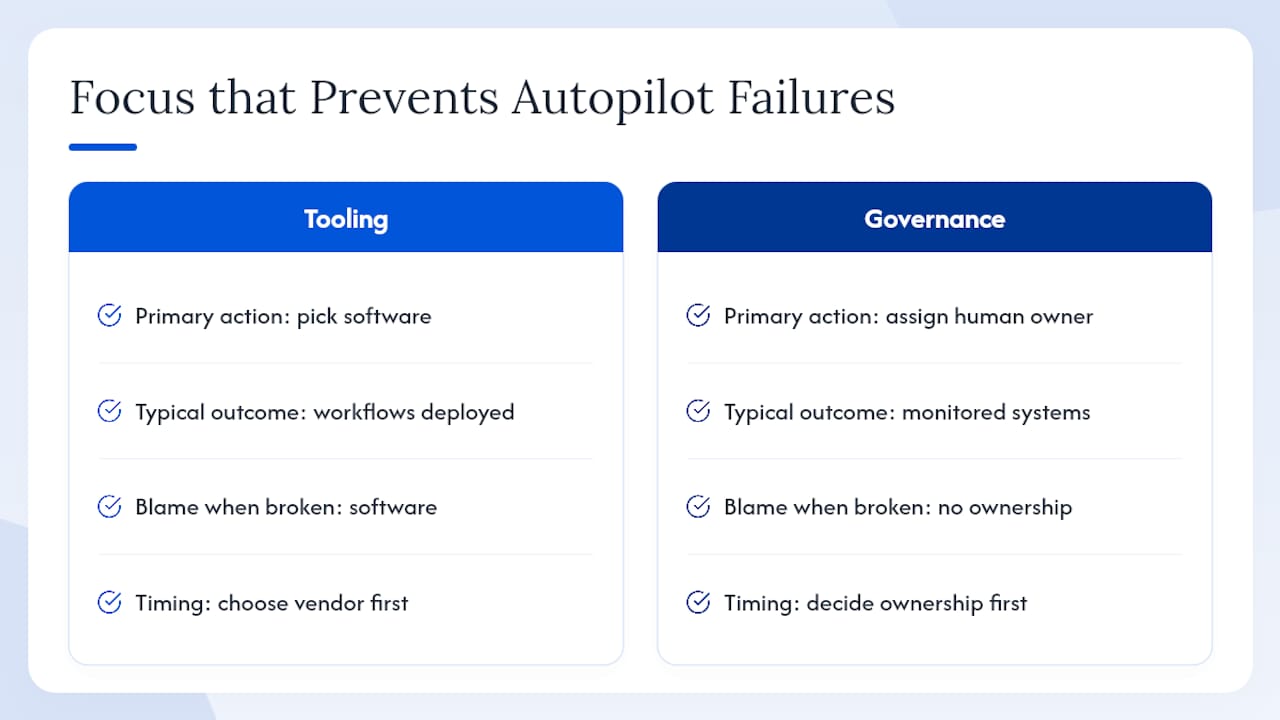
I’d argue the real failure point in autopilot marketing isn’t technical at all. It’s governance. A business buys a $50 automation platform, wires up five workflows in a weekend, and never looks at it again until a customer complains about getting six emails after canceling. The software didn’t fail. Nobody assigned ownership.
The FTC’s 2024 rule on fake reviews is a useful stress test here: it’s not really about reviews, it’s about whether your business treats “the AI did it” as an excuse. It isn’t one. If you automate, someone specific on your team needs to own the exception queue, the compliance list, and the weekly numbers. Prioritize that ownership question before you evaluate a single vendor. The businesses that get burned by autopilot marketing almost never picked the wrong software. They just never assigned a human to watch it.
— Mike
Ready to Put Content and Backlinks on Autopilot?
Mysearchhero replaces the patchwork of an SEO freelancer, a backlink vendor, and a social media contractor with one subscription that runs on autopilot: SEO articles, backlinks, Reddit mentions, and social posts delivered monthly, without agency retainers or ad spend.
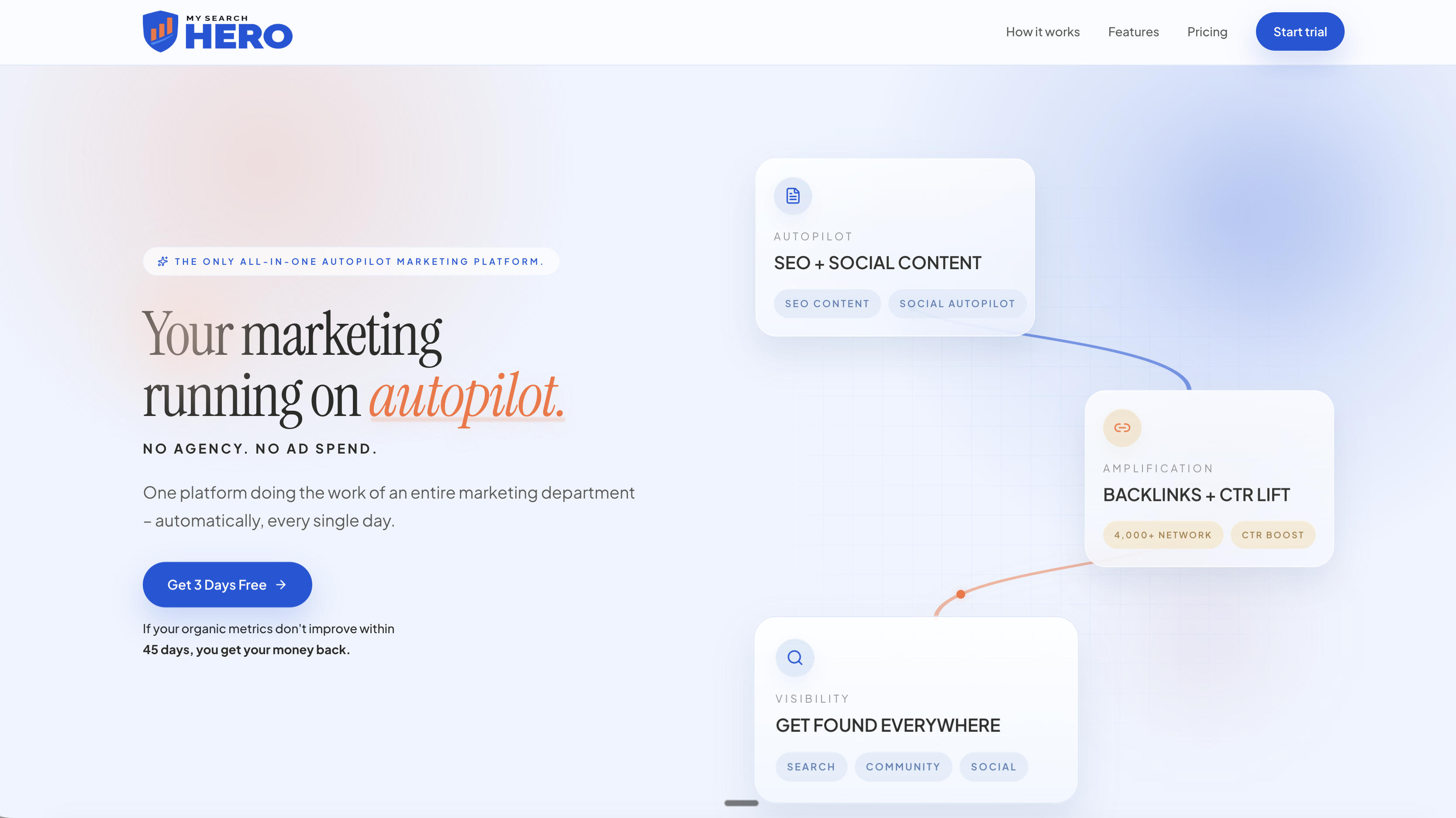
It fits owners who want the compounding effect of consistent publishing without managing the workflow themselves. There are plans available that include daily asset creation across content, backlinks, and social channels, with a money-back guarantee if your organic metrics do not improve. Lower-commitment options are available, with annual pricing for businesses that want to lock in a rate. If you’re weighing a managed system against building your own, visit the plan details on Mysearchhero and pick the tier that matches your current traffic goals.
Where to Read the Original Rules and Guides
For the compliance basics covered here, go straight to the source. The FTC’s CAN-SPAM compliance guide covers every required element of a commercial email. The FTC’s reviews and testimonials rule announcement explains what counts as a deceptive endorsement. For hands-on setup, Mailchimp’s customer journey automation guide and Google’s Business Profile tools are both practical starting points.
Sources
- CAN-SPAM Act: A Compliance Guide for Business (FTC)
- Enter the New Era of Customer Journey Automation (Mailchimp)
- Manage your Business Profile on Google with the Gemini web app (Google Support)
- From novelty to autopilot: How generative AI is reshaping marketing (California Management Review, 2025)
FAQ
Can I Actually Earn Money Using Marketing on Autopilot?
Yes, automated workflows like cart recovery and post-purchase nurture sequences generate real revenue because they capture sales you’d otherwise lose to inaction. The gains come from consistency, not from any single “set it and walk away” trick, and they still require monitoring to keep converting.
What Is the 70/20/10 Rule in Marketing?
Applied to automation, that means most of your workflows should be safe, tested sequences, with a small slice reserved for testing new AI-driven approaches.
What Are the Top Marketing Automation Platforms for Small Businesses?
The category includes email and SMS platforms, CRM-integrated journey builders, and broader done-for-you services like Mysearchhero, which bundles content, backlinks, and social automation into one subscription. The right pick depends on whether you want to build workflows yourself or hand off the entire output.
Is AI Going to Replace Marketers?
No, AI is replacing repetitive drafting and scheduling tasks, not marketing judgment or strategy. The FTC’s rule against fake endorsements makes this explicit: someone accountable still has to sign off on what AI produces before it reaches a customer.
How Much Does Marketing on Autopilot Cost?
Costs range from a few hundred dollars a month for basic email automation software to done-for-you services with tiered monthly plans and options for larger operations.