
Automated internal linking is software-assisted discovery and insertion of crawlable HTML anchor links between pages on the same site, built to speed up how quickly new content gets found and to spread link equity more evenly. It fits best on large or fast-publishing sites, or any site with a backlog of deep, under-linked pages. Done well, it cuts manual linking work, speeds crawling of new URLs, and produces more consistent link distribution than an editorial team can manage by hand.
TL;DR:
- Automated internal linking is most effective for large, fast-publishing sites with deep, under-linked pages, especially at site levels three and four.
- Link format matters: only HTML anchor tags with valid
hrefattributes reliably generate crawlable links, while JavaScript-inserted links require proper rendering.- Prioritize linking to pillar content and high-ranking pages, using a data-driven approach to identify under-linked deep pages based on crawl depth and link counts.
- Automation safeguards include validating
hrefintegrity, avoiding repetitive commercial anchor text, and varying anchor wording to prevent keyword stuffing.- Implementation benefits from staged rollout, editorial approval workflows, and regular monitoring with tools like Search Console, especially during initial deployment.
Table of Contents
- What automated internal linking is and how it works
- When to automate versus when to keep linking manual
- Prioritization rules and a data-driven method to find under-linked pages
- Anchor text, placement, and quality safeguards
- Tooling categories and what to look for
- Auditing and measuring whether automation actually worked
- Practitioner notes on managed automated link workflows
- Expert perspective: governance matters more than the algorithm
- How we support safe, automated internal linking
- FAQ
- Sources
What automated internal linking is and how it works
Automated internal linking runs as a pipeline, not a single action. First, software crawls the site and builds an inventory of URLs, templates, and existing links. Next, it identifies candidate link opportunities, usually through semantic or keyword matching and topic clustering, to find pages that are genuinely related. Then it scores and prioritizes those candidates based on relevance and business value. Finally, it generates anchor text and inserts the link, either directly into a template or through a hook that fires at publish time.

The technical requirement that trips up the most implementations is link format. Google’s own guidance on crawlable links states that reliable crawling depends on ordinary HTML anchor elements with an href attribute. JavaScript-inserted links are fine, as long as they render into that same standard anchor markup. Links that only respond to a click event, with no real href, are invisible to crawlers.
Where automation inserts links matters as much as how:
- Contextual in-body links carry the most relevance signal but need careful sentence-level insertion to avoid reading as forced.
- Related-post modules are low-risk and easy to automate, though they add less topical specificity.
- Breadcrumbs reinforce site structure automatically but rarely substitute for contextual links deeper in the content.
Each insertion point has a different risk-to-effort ratio, which is why most mature setups combine at least two.
When to automate versus when to keep linking manual
The right approach depends on scale, not preference. Use these criteria to decide:
- Publishing volume. Sites adding dozens of pages a month outgrow manual linking fast; a handful of posts a month rarely justifies the tooling overhead.
- Editorial capacity. If your writers already struggle to hit deadlines, asking them to manually cross-link every article is unrealistic.
- Template complexity. Highly templated sites (e-commerce, directories) automate cleanly; heavily custom editorial pages need more human judgment.
- Orphan page prevalence. A site audit showing many pages with zero or one inbound internal link is a strong automation signal.
The risks worth watching are irrelevant anchors, links that dilute the prominence of your most important pages by treating every page equally, and templates that quietly over-link until every page looks the same. Middle-ground workflows solve most of this: suggestion-only interfaces that surface candidate links for an editor to approve, approval gates before anything ships, and periodic batch runs instead of real-time insertion on every publish.
Prioritization rules and a data-driven method to find under-linked pages
Not every page deserves equal linking attention. Pillar pages, strong ranking candidates, and deep pages with few inbound internal links should sit at the top of any queue.
A reproducible way to find those deep, under-linked pages comes from a data-driven approach to internal link structure, which models link distribution by crawl depth rather than treating the whole site as one pool:
- Export a full crawl and record each URL’s crawl depth and count of inbound internal links.
- Group URLs by depth level, since link counts naturally drop the deeper a page sits.
- Compute a lower-quantile cutoff per depth (the cited analysis used the 35th percentile) to flag pages that fall below what’s typical for their level.
- Export the flagged list as your targeted linking queue.
That same analysis found under-linked pages concentrated at site levels three and four, which is often where cornerstone content quietly goes unnoticed.
Pro Tip: Layer business signals on top of the quantile flag: a page with search impressions or real conversion value jumps the queue even if its link count looks typical for its depth.
Anchor text, placement, and quality safeguards
Automation rules need explicit guardrails, or they will eventually produce links that hurt more than they help. Google’s guidance on anchor text and crawlable links is specific: anchor text should be visible and descriptive, image links need descriptive alt text, and every href should resolve to a real, canonical URL rather than a redirect chain.
Build these checks directly into your automation rules:
- Validate every generated
hrefbefore insertion, rejecting broken links or ones pointing at non-canonical URLs. - Check for redirect chains and fix the target rather than linking through a 301.
- Block identical commercial anchor text from repeating sitewide, since that pattern reads as manipulative.
- Favor contextual placement near genuinely related content over forcing a link into an unrelated paragraph.
Templates should vary anchor wording across instances rather than reusing the same phrase on every page that links to a given target. Repetition at scale is the fastest way to turn a helpful feature into something that looks like keyword stuffing.
Tooling categories and what to look for
Automated internal linking tools generally fall into four categories: CMS-native plugins built for a specific platform, standalone SaaS automation platforms, crawler-based suggestion tools paired with an editorial approval interface, and custom scripts triggered at publish time.
Whichever category you evaluate, run it against the same checklist:
- Crawlable output. Confirm it generates real
<a href>elements, not JavaScript click handlers with no underlying anchor. - Staging preview. You should see exactly what will be inserted before it goes live.
- Granular rules. Look for control over anchor text variation, insertion density, and which page types are eligible.
- Audit logs and rollback. Every inserted link needs a record, and a bad batch needs a fast undo.
- Scale and performance limits. Confirm the tool handles your page count without slowing render time.
- API access. Useful for pulling link data into your own reporting rather than relying on a vendor dashboard alone.
Integration details matter just as much as feature lists. Check how the tool hooks into your CMS, test it against your actual templates rather than a demo site, and roll out changes in stages so a template-level mistake doesn’t propagate across thousands of pages at once; consider an AI Website Builder with a Real Backend to streamline CMS integration.
Auditing and measuring whether automation actually worked
Proving impact takes more than a before-and-after glance at traffic. The Search Console Links report and URL Inspection tool are useful for spot checks, but the Links report is a sample of what Google has recorded, not a full inventory, so pair it with a complete crawler export for the real picture.
A workable validation sequence:
- Live-test rendered HTML on a representative set of templates to confirm inserted links appear as standard anchor elements, not JS-only handlers.
- Roll out in phases, holding a control group of comparable pages back from the change to isolate its effect.
- Track the metrics that matter: new internal links to target pages, crawl frequency, indexed page counts, impressions, ranking position, and organic clicks.
- Watch for negative signals, including index drops or new crawl errors, before expanding the rollout further.
One figure worth tracking closely: the Search Console Page Indexing report can list up to 1,000 example excluded URLs, which makes it a practical early-warning check after any site-wide linking change.
Practitioner notes on managed automated link workflows
Running automated internal linking in-house takes crawler access, scoring logic, and someone watching for drift. Our monthly automated SEO and content workflows include staged publishing and quality checks that map directly onto a safe link rollout.
What that looks like in practice:
- A pilot audit to establish baseline link distribution before any automation touches the site.
- Weekly checks on link velocity and triage to catch unexpected spikes or drops early.
- Staged insertion rather than a single sitewide push.
- Reporting on crawl and index changes tied back to the Search Console reporting signals that matter most.
Deciding between managed or in-house depends on available resources, how much direct control your team wants, and how much reporting detail you need week to week.
Expert perspective: governance matters more than the algorithm
Most automated linking projects succeed or fail on governance, not on how clever the scoring model is. Teams that start with a suggestion-only interface, measure several signals instead of one, and build a rollback path before they need it tend to avoid the messes that give automation a bad name. The ones that skip straight to full automation, with no approval gate and no way to undo a bad batch, are the ones that end up walking everything back after an index drop.
Start small. Measure often. Keep the undo button within reach.
— Mike
How we support safe, automated internal linking
We build staged publishing and editorial QA into every monthly content cycle, which means automated link insertion gets the same guardrails we apply to the articles themselves: a pilot audit first, weekly link velocity checks, and reporting tied to crawl and index changes rather than guesswork.
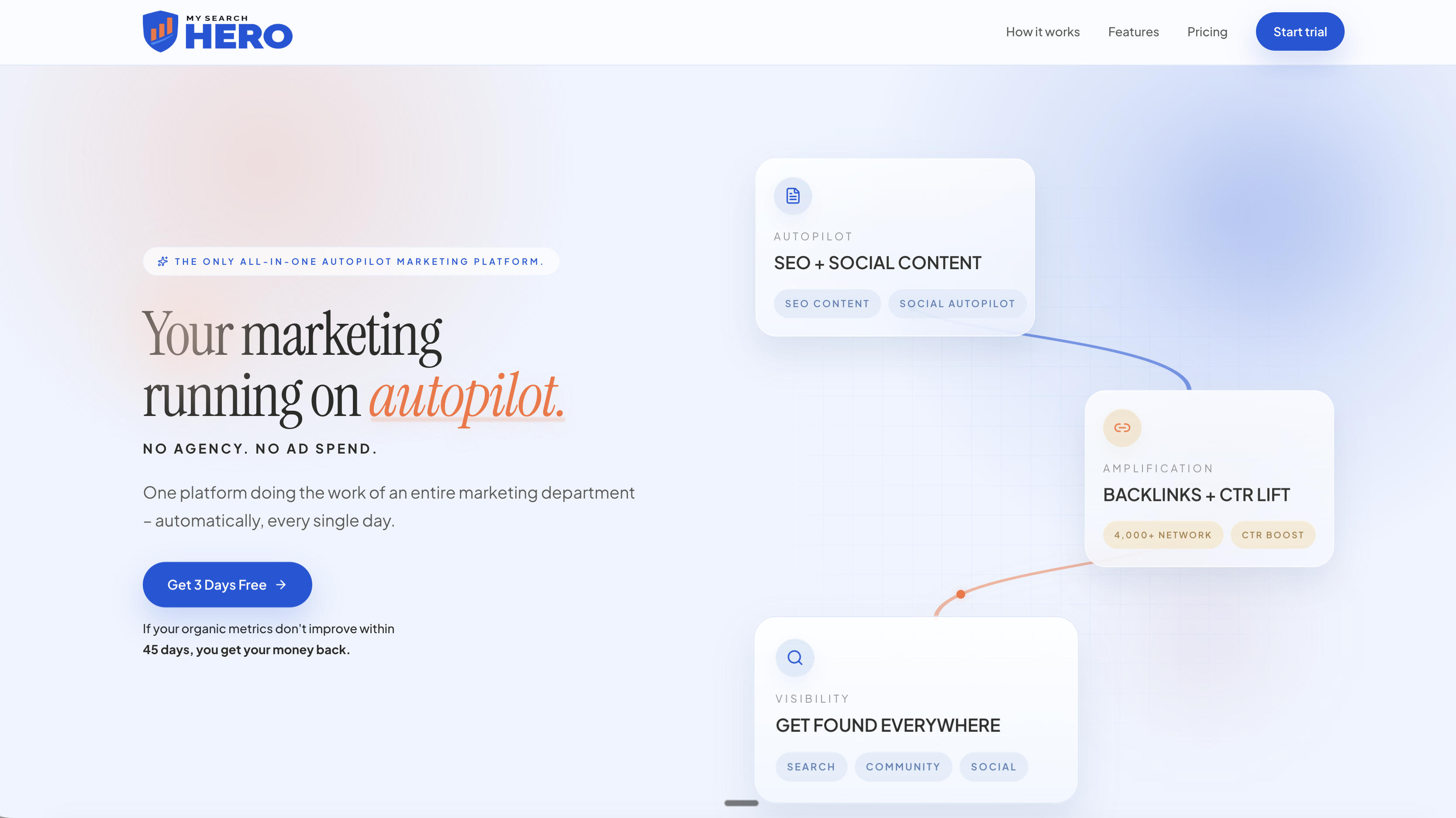
If you would rather hand the staged rollout, anchor validation, and reporting to a dedicated team than build it in-house, subscription plans exist that combine content, linking, and reporting into one package:
- Review our plans and pricing to find the bundle that matches your publishing volume.
- Request a pilot audit before committing to a full rollout.
- Get weekly reporting on link velocity, crawl behavior, and index changes without building the dashboard yourself.
FAQ
What does “internal linking” mean?
Internal linking is the practice of connecting pages within the same website using hyperlinks, which helps both visitors and search engines navigate from one page to another. Google uses these links to discover new pages to crawl and as a signal of which pages on a site carry the most relevance, according to its guidance on crawlable links.
What are the two main types of internal links?
Internal links generally split into navigational links, such as menus and breadcrumbs that stay consistent across a site, and contextual links, which appear within body content and point to specific related pages. Contextual links tend to carry more relevance signal because they sit next to the topic they’re pointing to.
How do I create an internal link?
An internal link needs a standard HTML anchor element with an href attribute pointing to the target URL and visible, descriptive text describing the destination, following Google’s crawlable link guidance. Links inserted only through a JavaScript click handler, with no real href, are unreliable for crawlers and should be avoided.
What are the best internal linking tools for SEO?
The right tool depends on your platform and scale: options range from CMS-native plugins and standalone SaaS automation platforms to crawler-suggestion tools paired with an editorial approval step. Whichever category fits, prioritize one that outputs real crawlable anchors, offers staging previews, and keeps an audit log you can roll back.
How do I automate internal links without hurting SEO?
Automating safely means validating every generated link’s href, avoiding repeated identical commercial anchors, and rolling changes out in phases with a control group held back for comparison. Watching Search Console and crawl data after each phase catches problems before they spread sitewide.
Sources
- Developers
- Links report – Search Console Help
- A data-driven approach to optimizing internal link structure — Search Engine Journal