
TL;DR:
- Digital branding involves creating a consistent and trustworthy identity across all digital channels, scalable for small businesses. Successful examples like Amazon, Dollar Shave Club, and Airbnb demonstrate how unified visual and verbal guidelines build loyalty and recognition. Small businesses should adopt systematic branding practices, including clear rules, templates, and regular audits, to maintain coherence and boost revenue over time.
Digital branding is defined as building a consistent, recognizable, and trustworthy brand identity across every digital channel your business occupies. For small and mid-sized businesses, the gap between knowing this and executing it is wide. The best examples of digital branding close that gap by showing exactly what consistency looks like in practice: a unified logo, a distinct brand voice, a color system that travels from your website to your email footer to your paid ads. Brands like Amazon, Dollar Shave Club, and Airbnb have set the standard. The good news is that the same principles scale down to businesses with a fraction of their budgets.
1. Examples of digital branding from global brands worth studying
The most instructive digital branding case studies come from brands that treat every touchpoint as part of one continuous experience.

Amazon is the clearest example of brand-aligned digital identity executed at scale. The smile logo, the orange accent color, the customer-first copy tone, and the review-driven trust signals all reinforce one message: reliability. Every page, ad, and email feels like Amazon because the brand rules are non-negotiable across every team.
Dollar Shave Club built its entire digital brand on a single viral video that cost almost nothing to produce. The video worked because the brand voice was specific and consistent: irreverent, direct, and anti-corporate. That same voice carried through every email, social post, and product page. The result was a brand identity so clear that Unilever acquired the company for $1 billion in 2016.
Airbnb takes a different approach. Its digital branding centers on localization and user-generated content. The brand voice shifts to match the traveler’s emotional state, from discovery to booking to post-trip reflection, while the visual identity stays fixed. Airbnb’s social media presence amplifies real guest stories, which creates emotional connection and trust without the brand having to manufacture it.
Pro Tip: Study how these brands handle their weakest touchpoints, not their best ones. The confirmation email, the 404 page, the customer service chat. That is where brand consistency either holds or falls apart.
2. How small businesses can apply digital branding strategies affordably
You do not need a global marketing budget to build a recognizable digital brand. You need a system.
The foundation is consistent logo, color, and typography applied without exception across your website, social profiles, email templates, and paid ads. This sounds obvious. Most small businesses still get it wrong because they let different team members or freelancers make small visual decisions without a reference document. Those small decisions accumulate into brand drift.
Here is a practical framework for SMBs building their digital brand from scratch:
- Define your brand core. Write a one-sentence brand position, a three-word tone guide (for example: direct, warm, expert), and a short list of topics you will never comment on publicly.
- Build a one-page brand guide. Include your hex color codes, approved fonts, logo variations, and a sample of on-brand copy versus off-brand copy.
- Create locked templates. Build Canva, Figma, or Adobe Express templates for your most-used formats: social posts, email headers, blog cover images. Lock the colors and fonts so contributors cannot accidentally deviate.
- Audit quarterly. Screenshot your last 30 days of digital output and compare it against your brand guide. Inconsistencies are almost always visible within five minutes.
- Centralize your assets. Use a shared folder or a digital asset management tool so every team member pulls from the same approved files.
The SODA digital art festival in Sorrento is a strong case study here. The team built a full brand and digital presence in three weeks, including visual identity, a website, and a paid social campaign, and sold out the event. The key was grounding the identity in local craft culture, which gave the brand instant authenticity without years of audience building.
Pro Tip: Your brand voice guide is more important than your logo. A logo can be inconsistently sized and still recognized. A brand voice that shifts from formal to casual to aggressive across channels destroys trust faster than any visual error.
3. What innovative digital branding campaigns look like in practice
The most memorable online branding techniques do not just display a brand. They embed the brand into an experience the customer actively chooses to engage with.
Chowking, the Filipino fast-food chain, ran a campaign called “Digital Swerte” that turned a traditional Filipino dice game into a digital interaction on the Grab platform. Players engaged with the game, unlocked rewards, and were pushed toward purchase. The campaign reached 21.4 million Grab users and produced measurable lifts in digital sales, purchase intent, and repeat visits. What made it work as a branding exercise was not the mechanics of the game. It was the cultural specificity. The dice game was already familiar and trusted. Chowking borrowed that trust and attached its brand to it.
The lessons for SMBs from campaigns like this are direct:
- Use platforms your audience already trusts. Chowking did not build a standalone app. It ran the campaign inside Grab, where the audience already lived. For most SMBs, that means Instagram, TikTok, or a marketplace like Etsy or Amazon rather than a custom-built experience.
- Tie the campaign to something culturally familiar. The strongest digital branding examples connect to existing behaviors, not invented ones.
- Measure beyond impressions. Purchase intent, repeat visits, and digital sales are the metrics that prove a branding campaign did real work. Impressions tell you how many people saw the brand. The other numbers tell you whether they believed it.
Brands like Patagonia and Duolingo demonstrate the same principle through content. Patagonia’s environmental content is not advertising. It is a values statement that the audience shares voluntarily. Duolingo’s TikTok presence is built on absurdist humor that fits the platform’s native culture. Both are practical digital branding touchpoints that generate reach without paid amplification.
4. What systems make digital branding consistent at scale
Creative output without governance produces brand drift. The brands with the strongest digital identities invest as much in their systems as in their campaigns.
A brand consistency audit is the most direct diagnostic tool available. It scores your current digital output against your brand rules across color usage, typography, logo placement, imagery style, and tone of voice. Fixing those inconsistencies can increase revenue by up to 23%. That number reflects a straightforward mechanism: consistent brands are recognized faster, trusted more readily, and chosen more often when a buyer is deciding between options.
| System | What it does | SMB application |
|---|---|---|
| Design tokens | Enforce color, font, and spacing rules at the code level | Use CSS variables or Figma styles to lock brand colors site-wide |
| Brand guidelines hub | Single source of truth for all brand rules | A shared Notion page or Google Doc with logos, fonts, and tone examples |
| Locked templates | Pre-built creative files with restricted editing | Canva Brand Kit or Adobe Express templates for social and email |
| Approval workflow | Human review before brand assets go live | A simple Slack or Trello review step before publishing |
| Quarterly audit | Scheduled review of all digital output for consistency | Screenshot audit compared against brand guide every 90 days |
McDonald’s design system is the enterprise benchmark here. The brand uses fixed color tokens and typography ladders that apply identically whether the output is a digital menu board, a mobile app screen, or a social ad. No designer on the team can accidentally use the wrong red. For SMBs, the equivalent is a Canva Brand Kit with locked hex codes and a single approved font pairing.
Preventing brand drift requires operational discipline, not just creative talent. Living brand guidelines, shared asset libraries, and approval workflows are what keep a brand recognizable as the team grows and the channel count increases. The best practice for fast-moving teams is making on-brand output the default, not the exception, by building the rules into the tools themselves.
Strong digital brands also reduce marketing costs over time. When your audience recognizes you instantly, you spend less on re-introduction and more on conversion. Brand consistency drives revenue increases averaging 23%, with the most consistent brands seeing gains above 33%.
Key takeaways
Successful digital branding for SMBs requires consistent identity systems, not just creative campaigns. The brands that grow fastest are the ones that make on-brand output the default through templates, guidelines, and regular audits.
| Point | Details |
|---|---|
| Define brand rules first | Document hex codes, fonts, tone, and logo rules before launching any campaign. |
| Use locked templates | Canva Brand Kit or Figma styles prevent unauthorized visual changes across teams. |
| Audit quarterly | A 30-day screenshot review against your brand guide catches drift before it compounds. |
| Embed brand in experience | Campaigns like Chowking’s “Digital Swerte” show that brand works best inside familiar platforms. |
| Consistency drives revenue | Brands with consistent presentation see revenue increases of 23% to 33% on average. |
Why most SMBs get digital branding backwards
I have reviewed hundreds of small business digital presences over the years, and the pattern is almost always the same. The owner spent real money on a logo, maybe even a brand guide, and then handed execution off to whoever was available. Six months later, the Instagram grid uses three different fonts, the email footer has an old logo version, and the website copy sounds like it was written by a different company entirely.
The mistake is treating digital branding as a creative project with a finish line. It is not. It is an operational discipline with no end date. The brands I have seen grow fastest, including local service businesses and niche e-commerce stores, are the ones that built boring, unglamorous systems early. Locked templates. A shared asset folder. A one-page brand guide that every contractor receives before they touch anything.
The other thing I would push back on is the instinct to copy large brand aesthetics directly. Dollar Shave Club’s irreverence worked because it was authentic to the founders. Airbnb’s localization works because the product is genuinely local. When SMBs mimic those aesthetics without the underlying truth, audiences notice. Your brand voice should come from what you actually believe about your category, not from what performed well for someone else.
If you are using marketing automation tools to scale your content output, the governance risk increases. Automated pipelines can amplify brand drift just as fast as they amplify reach. Build the rules into the system before you scale the volume.
— Mike
How Mysearchhero helps you build a consistent digital brand
Building a recognizable digital brand takes more than a good logo. It takes consistent content, regular publishing, and a presence that compounds over time across search, social, and AI-powered discovery.
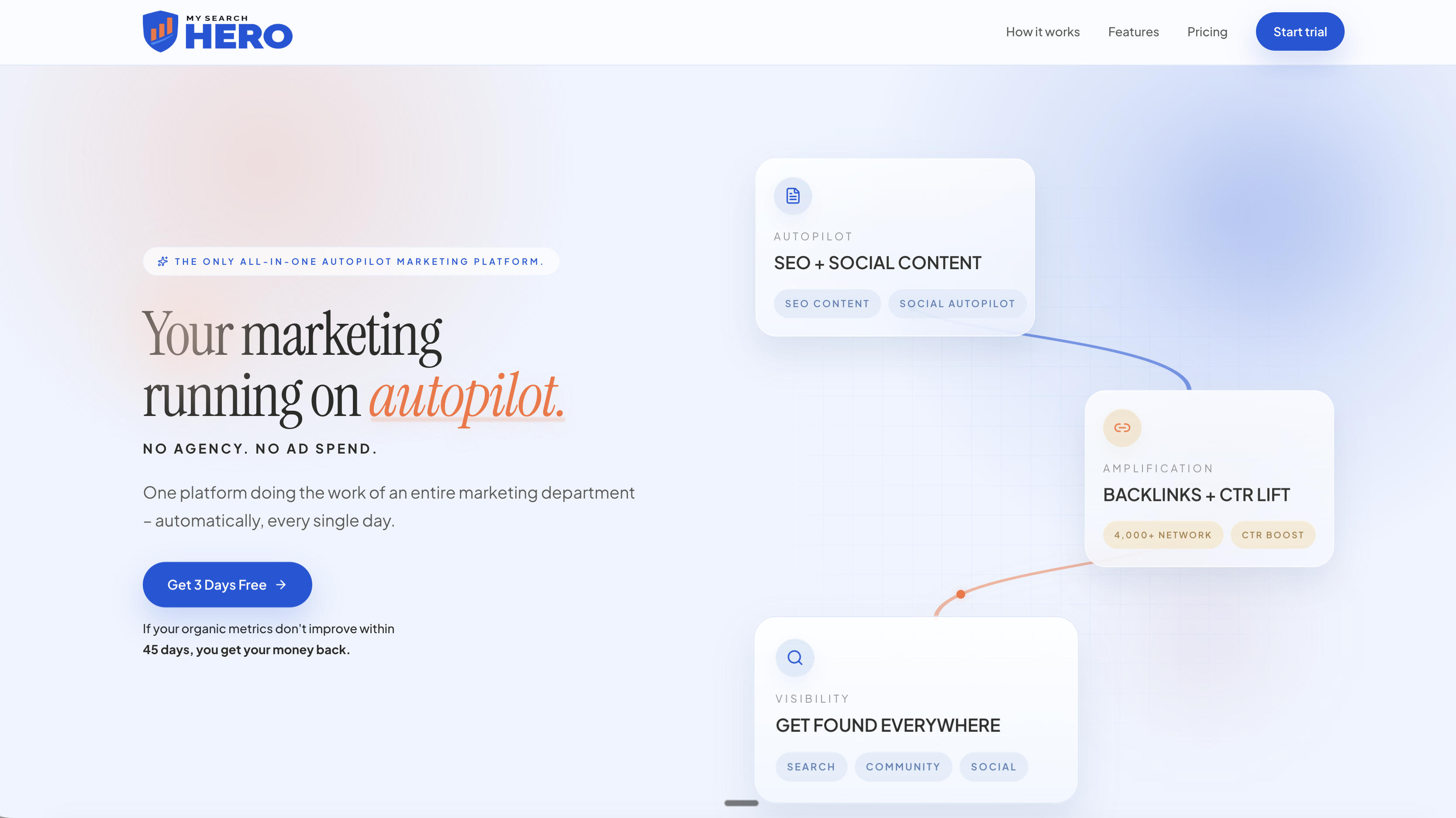
Mysearchhero is a done-for-you SEO and content marketing service built for SMBs who want their digital marketing on autopilot. Each month, subscribers receive published articles, backlinks, Reddit mentions, and AI-generated social media posts pushed through a fully automated pipeline. Your brand stays visible and consistent without requiring you to manage every piece manually. If you want to see what that looks like for your business, Mysearchhero makes it straightforward to get started.
FAQ
What are the best examples of digital branding for small businesses?
The SODA digital art festival built a complete brand and sold out an event in three weeks using a consistent visual identity, a website, and paid social. Dollar Shave Club built a billion-dollar brand on a single viral video with a consistent, irreverent voice across every channel.
How does brand consistency affect revenue?
Consistent brand presentation increases revenue by an average of 23%, with the most consistent brands seeing gains above 33%. The mechanism is recognition and trust: familiar brands are chosen more often at the point of decision.
What digital branding strategies work for businesses with small budgets?
Locked templates, a one-page brand guide, and a shared asset library cost almost nothing to build and prevent the brand drift that undermines paid campaigns. The SODA case study proves that a sold-out launch is achievable in three weeks with a tight, consistent identity.
What is the difference between digital branding and digital marketing?
Digital branding defines who you are across digital channels: your visual identity, voice, and positioning. Digital marketing uses that identity to drive specific actions like clicks, leads, and purchases. Branding without marketing lacks reach. Marketing without branding lacks recognition.
How do I know if my digital brand is consistent?
Run a brand consistency audit: pull screenshots of your last 30 days of digital output and compare them against your brand guide. Check color usage, typography, logo versions, and copy tone. Inconsistencies across those four areas are the most common sources of brand drift for growing SMBs.