
Search Lift measures whether your ads caused more people to search for your brand or product, using a holdout experiment that compares exposed users against a control group. It differs from Brand Lift in one key way: Brand Lift asks people what they remember and think through surveys, while Search Lift watches what they actually type into Google Search and YouTube afterward. Google’s own documentation frames it as a report on Relative Lift and normalized incremental searches per impression or cost. For teams running campaigns through a service like Mysearchhero, Search Lift answers a narrower, more concrete question than most awareness metrics can.
- Measures actual search behavior, not stated recall
- Uses a randomized holdout, not a self-reported survey
- Reports incremental searches per impression and per dollar spent.
Key Takeaways
Search Lift proves causation through a randomized holdout test, while Brand Lift measures self-reported attitude change, and pairing both with a content plan turns a single spike into sustained organic growth.
| Point | Details |
|---|---|
| Search Lift measures behavior | It tracks actual search queries via a holdout experiment, not survey responses. |
| Budget and term selection drive detectability | Thin budgets and generic terms produce underpowered, unreliable results. |
| Read both lift figures together | Relative Lift and normalized incremental searches per cost must be checked jointly, not alone. |
| Contamination and overlap distort results | Competitor activity and audience overlap are the top causes of misleading lift readings. |
| Mysearchhero extends the signal | Once lift confirms rising brand interest, ongoing content and backlinks from Mysearchhero help sustain organic visibility. |
Table of Contents
- What Brand Search Lift Actually Measures
- Setup and Eligibility Checklist for a Search Lift Study
- How to Choose Search Terms That Make Lift Detectable
- Reading Search Lift Metrics: What the Numbers Actually Mean
- Common Search Lift Failure Modes and How to Fix Them
- Search Lift vs. Brand Lift vs. Conversion Lift: Which One Answers Your Question
- Turning Lift Data Into Action
- Turning Detected Lift Into Lasting Organic Growth
- Where to Read More on Search Lift
- Sources
- FAQ
What Brand Search Lift Actually Measures
Search Lift isolates causation, not correlation. Google splits your audience into two groups before the campaign runs: one sees your ads, the other doesn’t. Both groups get compared on the same window of time for the same search terms, so any gap between them is attributable to the ad exposure itself rather than seasonality, news events, or existing demand.
The study observes search queries on Google Search and YouTube tied to the specific terms you define, whether that’s your brand name, a product line, or a campaign-specific phrase. Google reports these in aggregate, not user-by-user, and small studies sometimes hit reporting thresholds that suppress results to protect privacy. That’s a real constraint: if your brand term gets low search volume overall, the study may not have enough data to produce a reliable read.
- Google assigns users to exposed and holdout groups before your campaign launches.
- Both groups are tracked for the same search terms over the same window.
- Google compares search volume between groups and calculates the incremental difference.
- Results get normalized per impression and per cost so you can compare across campaigns.
Pro Tip: Run your study for the campaign’s full flight plus a buffer. A two-week campaign rarely generates enough search volume to produce a statistically stable result.
According to Google’s own guidance, Search Lift reports Relative Lift and normalized incremental searches per impression or cost, the two figures that anchor everything downstream in this guide.
Setup and Eligibility Checklist for a Search Lift Study
Before you build anything, confirm the account can actually run the study. Not every campaign qualifies, and skipping this step wastes setup time.
- Check with your Google account representative if you have one; some eligibility gates require rep-level confirmation.
- Confirm your campaign type and format are supported for Search Lift measurement.
- Budget matters. Google references a $10,000 minimum in the US for related Brand Lift studies, and that same budget context shapes Search Lift eligibility too. Reach drives statistical power, so thin budgets often can’t generate a detectable signal.
- Create a Product or Brand grouping inside your account to define what you’re measuring.
- Select which campaigns feed into the study.
- Define your search term groups (more on this below).
- Launch the study and let it run through the full flight.
Pro Tip: If your budget sits below the reference threshold, don’t force a study. A false “no lift” reading from an underpowered test is worse than no test at all, because teams sometimes treat it as proof the campaign didn’t work.
How to Choose Search Terms That Make Lift Detectable
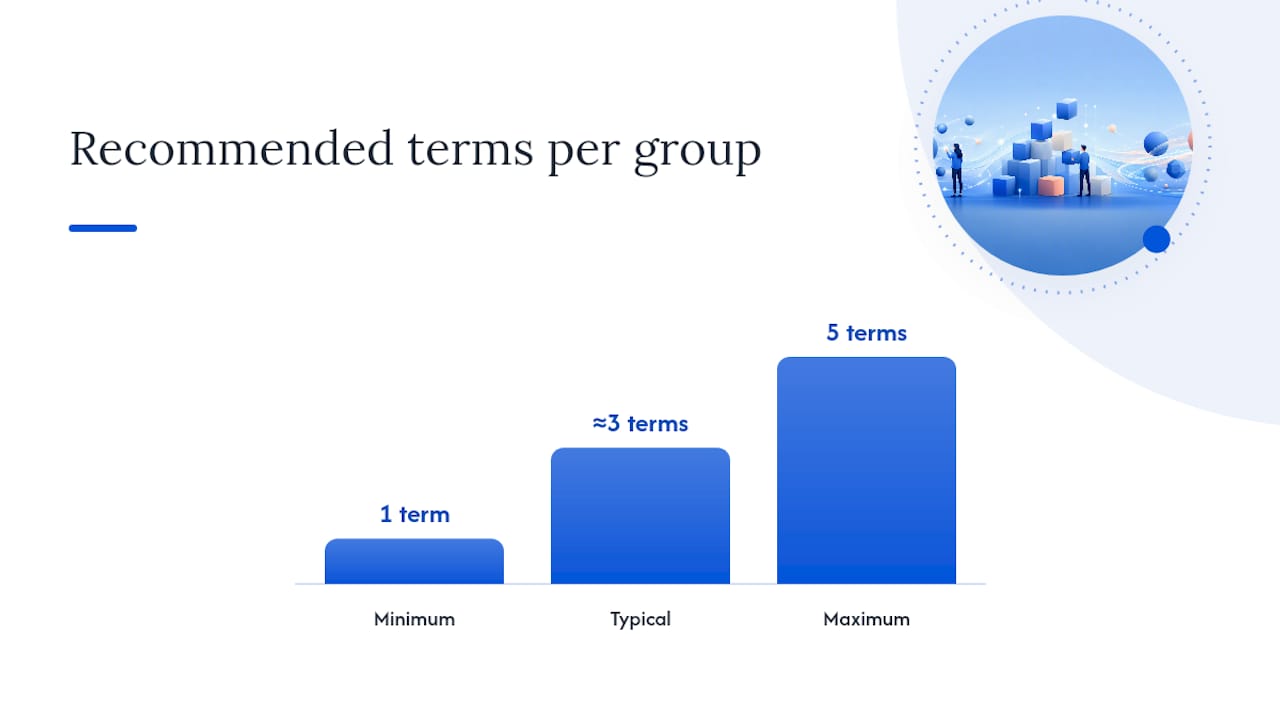
Term selection is where most Search Lift studies quietly fail. Pick terms too broad, and you’ll capture noise from unrelated demand. Pick terms too narrow, and you won’t have enough volume to measure anything.
Specificity is the rule. You want search terms unlikely to get typed without your ad running, which usually means your brand name, a specific product name, or a distinctive campaign phrase. Google groups similar variants automatically, so a small number of high-quality terms outperforms a long list of low-volume ones. Google’s own guidance recommends one to five terms per group, typically with one or two groups total.
- Good: your exact brand name, a flagship product name, a unique campaign tagline
- Bad: generic category terms (“running shoes”), competitor brand names, terms with high organic baseline volume unrelated to the ad
Pro Tip: If you’re unsure whether a term is too generic, check its existing search volume before the campaign starts. High baseline volume with no clear brand tie usually means the term will dilute your signal.
Reading Search Lift Metrics: What the Numbers Actually Mean
Two numbers matter most. Relative Lift is the percentage increase in searches among the exposed group compared to the holdout group. Normalized incremental searches per impression (or per cost) translates that percentage into a rate you can compare across campaigns of different sizes.
Here’s where interpretation gets tricky: a large percentage lift on a tiny baseline can look dramatic but mean almost nothing in absolute terms, while a modest percentage lift on a high baseline can represent thousands of incremental searches. Always check both numbers together, not one in isolation.
- A high Relative Lift with a low baseline search volume warrants caution before declaring a win.
- A moderate Relative Lift with high baseline volume often signals meaningful, budget-worthy incrementality.
- Confidence intervals matter more than the headline number. A study with wide intervals showing “no lift” may just mean the test lacked statistical power, not that the campaign failed.
As a decision rule, teams generally treat a clearly positive, statistically stable lift as justification to expand budget or extend the campaign, a flat or ambiguous result as a signal to extend the test window before acting, and a negative or contaminated result as a reason to audit term selection and competitive activity before touching the budget.
Common Search Lift Failure Modes and How to Fix Them
Most bad Search Lift readings trace back to one of three problems, not a broken campaign.
Competitive contamination tops the list. If a competitor launches a major campaign during your study window, category search volume can spike for reasons that have nothing to do with your ads. Cross-check spikes against known competitive activity before trusting an unusual result.
Underpowered studies come next. Practitioner guidance recommends an eight-week pre-period baseline to establish stable normal behavior before the campaign starts measuring lift against it.
- Set an eight-week baseline window minimum before launch.
- Watch for campaign overlap; running multiple campaigns targeting the same audience can bleed exposure into your control group.
- Use geographic or temporal holdouts when audience holdouts risk overlap.
Pro Tip: To put a dollar figure on lift, multiply incremental branded query volume by your brand term’s paid-search CPC. That gives you a rough organic-search value equivalent your finance team can actually use.
Search Lift vs. Brand Lift vs. Conversion Lift: Which One Answers Your Question
These three measurement tools answer three different business questions, and confusing them leads to the wrong test.
- Search Lift answers: did my ad cause more people to search for my brand or product? It measures behavior directly through query volume.
- Brand Lift answers: did my ad change how people feel about my brand? It relies on surveys measuring recall, awareness, and consideration.
- Conversion Lift answers: did my ad drive more purchases or sign-ups? It measures the bottom of the funnel directly.
Match the tool to the campaign stage. An upper-funnel awareness campaign with no immediate purchase intent is a natural fit for Search Lift, since attitudinal surveys can miss subtle behavioral shifts that show up in search data first. A rebrand or messaging test that needs to know whether attitudes actually shifted calls for Brand Lift. A performance campaign built to drive sales belongs with Conversion Lift.
Running Search Lift and Brand Lift together isn’t redundant. Branded searches typically carry higher purchase intent than generic queries, so pairing behavioral data with attitudinal data gives you both the “what changed” and the “why it changed.” Budget for both if your campaign budget supports the combined minimums.
Turning Lift Data Into Action
Most teams stop at reporting the number. That’s the mistake. Set decision triggers before the study launches: a lift threshold that expands budget, one that greenlights a creative test, one that triggers deeper investigation. Coordinate the timing with landing-page and content readiness. A lift study that shows more people searching your brand name means nothing if your site can’t convert that curiosity once they land. Treating organic amplification as part of the same plan, not an afterthought, is what separates teams that act on lift from teams that just report it.
Turning Detected Lift Into Lasting Organic Growth
Once a Search Lift study confirms your ads are pushing more people to search your brand, the next question is what happens when they land. A spike in branded queries is a short-term signal. Whether it turns into lasting organic visibility depends on what’s waiting for those searchers: fresh content, backlinks that support your domain’s authority, and a presence beyond your own site.
Mysearchhero was built for exactly this handoff. Instead of hiring an agency retainer to chase the traffic your ad spend just uncovered, subscribers get monthly published articles, backlinks through a publisher network, Reddit mentions in relevant conversations, and AI-generated social posts, all pushed out automatically once the campaign work is done. That’s the piece most Search Lift studies never account for: the lift shows you demand exists, but converting a branded search into a habit requires branded content that keeps ranking long after the campaign budget runs out. If your last lift study showed real movement, check what Mysearchhero can put in place before your next one runs.
Where to Read More on Search Lift
Google’s Search Lift overview explains the core metrics, while the setup guide walks through eligibility and term selection in detail. For a practitioner’s take on holdout design and contamination controls, the Search Lift and Brand Lift breakdown covers the operational details Google’s docs skip.
Sources
FAQ
What Are the 5 Levels of Brand Recognition?
Brand recognition is commonly described in stages ranging from no awareness, through recognition (identifying a brand when prompted), recall (naming it unprompted), preference, and finally top-of-mind loyalty; definitions vary slightly by source, but Search Lift primarily captures movement between the recognition and recall stages.
How Much Does a Brand Lift Study Typically Cost?
Google ties Brand Lift and related Search Lift eligibility to a budget reference of $10,000 in the US, since sufficient reach is needed to generate a statistically stable result.
Is $20 a Day Good for Google Ads?
A small daily budget can work for small, highly targeted campaigns, but it falls far short of the reach needed to run a Search Lift or Brand Lift study, which requires much larger sustained spend to produce a measurable result.
How Do You Calculate Brand Lift?
Brand Lift compares survey responses between an exposed group and a control group to measure percentage changes in metrics like ad recall and awareness, while Search Lift instead calculates Relative Lift and normalized incremental searches by comparing actual query volume between those same two groups.
Can I Run Search Lift Without Also Running Brand Lift?
Yes, Search Lift runs independently and measures behavior directly through search volume, though running it alongside Brand Lift gives you both a behavioral and attitudinal read on the same campaign.