
TL;DR:
- Influencers generate authentic backlinks and branded searches that boost small businesses’ search authority.
- Aligning influencer content with SEO strategies creates lasting assets that improve rankings and organic traffic.
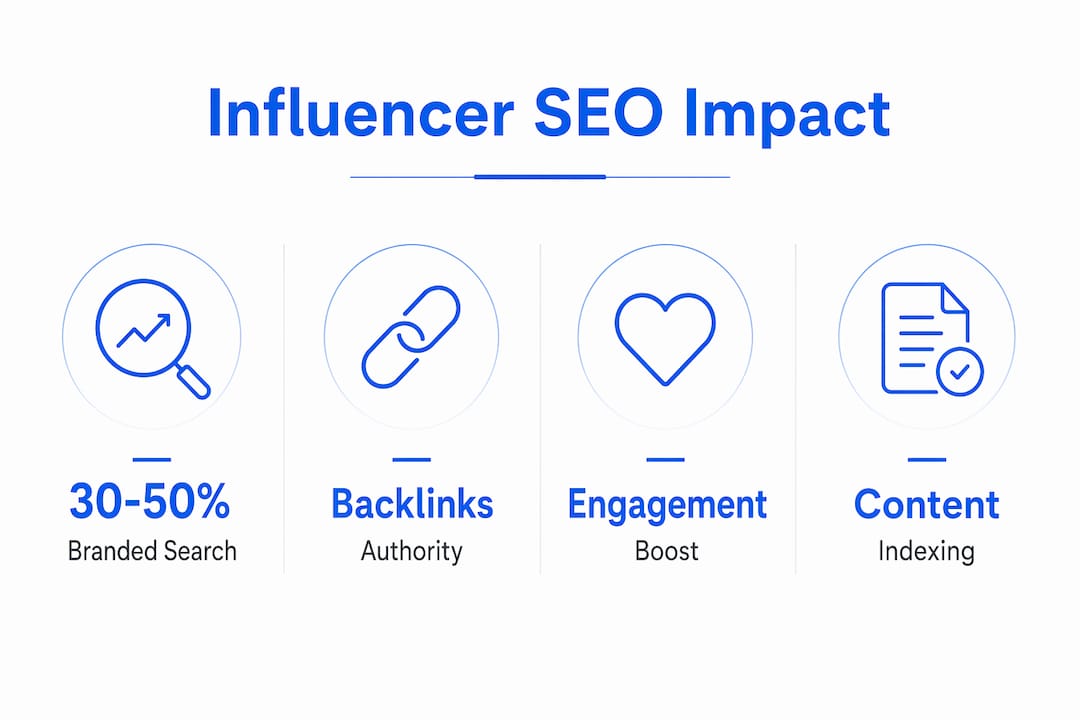
Influencers are defined as one of the most direct drivers of organic search authority available to small businesses today. The role of influencers in SEO goes beyond social media reach. Influencer content generates authentic backlinks, triggers branded searches, and creates engagement signals that search engines treat as trust votes. Influencer campaigns can increase branded search volume by 30–50%, which signals rising brand authority directly to Google’s ranking algorithm. For small businesses working with limited budgets, that kind of compounding visibility is hard to replicate through paid ads alone. Mysearchhero helps businesses capture exactly this kind of growth through done-for-you content and link-building pipelines.
How influencers in SEO create backlinks that actually move rankings
Backlinks are the currency of search authority. Every time an influencer publishes a blog post, YouTube video description, or long-form article that links to your site, search engines count that as a vote of confidence in your domain. Backlinks from influencer content act as authority signals that improve domain trust, and the quality and relevance of those links matter far more than the volume.

Most small businesses make the mistake of chasing generic link-building tactics: directory submissions, forum posts, and press release syndication. Influencer-generated backlinks are different. They come embedded in contextual content that real audiences read, which means the links carry topical relevance alongside raw authority.
Micro-influencers and nano-influencers are especially valuable here. Smaller creators with audience trust produce backlinks that search engines favor over mass-produced link schemes because the surrounding content is authentic and specific. A food blogger with 8,000 followers who writes a detailed review of your product and links to your site delivers more SEO value than a celebrity post with no link at all.
The best backlink sources from influencer partnerships include:
- Blog posts and long-form reviews that rank independently in Google search results
- YouTube video descriptions with direct links, which Google indexes and treats as authority signals
- Podcast show notes published on the creator’s website
- Guest articles where the influencer writes for a third-party publication and cites your brand
Pro Tip: When briefing influencers, ask them to link directly to a specific product page or blog post rather than your homepage. Contextual deep links pass more SEO value and improve rankings for the exact pages you want to grow.
How influencer campaigns drive branded search volume and user engagement
Branded search volume is one of the clearest signals Google uses to measure brand authority. When people search for your business name directly, Google interprets that as proof that real humans trust and seek out your brand. Influencer campaigns are one of the fastest ways to generate that demand organically.
“Influencer marketing and SEO are two interconnected engines that together drive search demand and capture user intent, enhancing overall brand authority.” Sprout Social
Influencer campaigns can increase branded search volume by 30–50%. That increase tells Google your brand is becoming more recognized and trusted, which feeds directly into ranking improvements across all your target keywords. The effect compounds over time as more people discover your brand through influencer content and then search for it directly.
User engagement from influencer referrals also matters. When someone clicks through from an influencer’s blog post to your site and spends four minutes reading your content, that session sends positive behavioral signals to search engines. High time-on-site and low bounce rates from referral traffic tell Google your content satisfies user intent. That is the kind of signal that lifts rankings without a single additional backlink.
Treating influencer marketing and SEO as separate silos is a major strategic mistake. Influencers create the conversations and search demand. Your SEO content then captures that demand and converts it. The two functions are interdependent, and small businesses that align them see compounding returns.
How to turn influencer content into permanent SEO assets
Most marketers treat influencer posts as temporary campaign material. That is the wrong frame. Every creator post and video is a permanent SEO asset that can rank in Google and generate clicks for months or years after publication. The key is designing campaigns around searchable topics aligned with real user intent.
Influencer content appears in Google SERPs, AI-generated answers, and platform search features. A YouTube review optimized with the right keywords can rank on the first page of Google for a product query. A blog post written by a niche creator can appear in AI overviews. Social content is effectively search inventory when it is built correctly.
Here is how to make influencer content work as a lasting SEO asset:
- Brief creators on target keywords. Give influencers a short list of 3–5 keywords you want to rank for. Ask them to use those phrases naturally in titles, headings, and body copy. Do not script the content. Just supply the vocabulary.
- Prioritize indexable formats. Blogs, video transcripts, and YouTube descriptions outlast Instagram Stories and TikTok posts. Build campaigns around formats that Google can crawl and index.
- Focus on evergreen topics. A creator who answers “how do I use [your product] for [specific problem]” will generate search traffic long after the campaign ends. Trend-chasing content has a short shelf life.
- Repurpose high-performing content. Promoting high-performing influencer assets through paid amplification extends their organic reach and generates additional backlinks as more people discover and share the content.
- Avoid the follow-count trap. Vet creators based on consistent content patterns that answer audience questions, not raw follower numbers. A creator with 5,000 engaged readers who consistently ranks for niche queries delivers more SEO value than a macro-influencer with passive followers.
Pro Tip: Ask potential influencer partners to share their Google Search Console data or show you examples of their content ranking in Google. Creators who understand search intent produce content that compounds in value over time.
How to align influencer marketing strategies with your SEO goals
Aligning influencer campaigns with SEO strategy requires treating both as parts of one system, not two separate budgets. The starting point is keyword research. Before you brief any creator, identify the search terms your ideal customers use. Then find influencers who already create content around those topics.
SEO strategies benefit from incorporating vocabulary introduced by influencers, because influencers often surface the exact phrases real people use when searching. If a creator’s audience consistently asks “what is the best affordable [product category],” that phrase belongs in your on-site content and your next influencer brief.
Long-term partnerships with micro-influencers and nano-influencers outperform one-off campaigns for SEO purposes. A creator who mentions your brand across six months of content builds a pattern of branded mentions and backlinks that search engines recognize as sustained authority. Sending product to 50 nano-influencers typically generates 10–20 pieces of organic content at zero media cost, each of which can rank and drive traffic independently.
Measuring influencer SEO success requires tracking the right metrics:
- Keyword rankings for terms the influencer content targets
- Organic traffic to pages linked from influencer content
- Backlink acquisition tracked through tools like Google Search Console or Ahrefs
- Branded search volume growth over the campaign period
- SERP features such as featured snippets or AI overviews that include influencer content
Niche creators ranking in top spots for intent queries consistently outperform large creators with no search visibility. Follower count is a vanity metric for SEO purposes. Click-through performance and content quality are what matter. You can read more about how different SEO strategies impact brand growth to see where influencer tactics fit within a broader plan.
For small businesses, the most practical approach is to start with three to five nano-influencers in your niche, brief them on two or three target keywords, and measure organic traffic and backlinks over 90 days. That data tells you which creators and content formats produce real SEO returns. You can also explore organic SEO tactics for small businesses to build the foundation that makes influencer content even more effective.
Key Takeaways
Influencer marketing and SEO work as one system: influencers generate search demand and backlinks, while SEO content captures and converts that demand into lasting organic traffic.
| Point | Details |
|---|---|
| Backlink quality over quantity | Influencer backlinks from blogs and YouTube descriptions carry topical relevance that generic link-building cannot match. |
| Branded search drives authority | Campaigns that increase branded search volume signal growing brand trust directly to Google’s ranking algorithm. |
| Content as search inventory | Brief influencers on target keywords and prioritize indexable formats like blogs and video transcripts over ephemeral posts. |
| Vet by content pattern, not followers | Creators who consistently rank for niche queries deliver more SEO value than macro-influencers with passive audiences. |
| Measure SEO metrics, not social likes | Track keyword rankings, organic traffic, and backlink growth to evaluate real influencer SEO performance. |
Why I stopped treating influencer campaigns as a social media tactic
The biggest shift I made was stopping the practice of measuring influencer campaigns by likes and shares. Those numbers feel good but tell you almost nothing about whether the campaign moved your search rankings or drove real traffic.
The businesses I have seen get the most from influencer marketing treat every piece of creator content as a search asset from day one. They brief creators on keywords before the campaign launches. They ask for blog posts and YouTube videos, not just Instagram Stories. They track backlinks and organic traffic for 90 days after each campaign, not just engagement in the first 48 hours.
The other thing most marketers get wrong is chasing large creators. A nano-influencer with 6,000 loyal readers in a specific niche will often outrank a celebrity post in Google search results because the content is specific, detailed, and answers real questions. That specificity is exactly what search algorithms reward. The role of SEO in business growth is long-term compounding visibility, and influencer content is one of the fastest ways to accelerate that compounding when it is built around search intent.
Start small. Pick three creators in your niche. Give them a keyword brief. Measure what ranks. Then scale what works.
— Mike
How Mysearchhero puts influencer-driven SEO on autopilot
Running influencer campaigns alongside a full SEO strategy is a lot to manage when you are also running a business. Mysearchhero is built for exactly this situation.
Each month, Mysearchhero delivers a complete bundle of published articles, backlinks, Reddit mentions, and social media content through a fully automated pipeline. You get the SEO infrastructure that makes influencer content more effective, including the on-site content that captures branded search demand and the backlinks that build domain authority. No agency retainers. No project management overhead. Just consistent, compounding SEO output that grows your visibility while you focus on your business.
FAQ
What is the role of influencers in SEO?
Influencers improve SEO by generating authentic backlinks, increasing branded search volume, and creating indexable content that ranks in Google. These signals build domain authority and drive organic traffic over time.
Do influencer backlinks actually help search rankings?
Yes. Backlinks from influencer blogs, YouTube descriptions, and articles act as authority signals that improve domain trust. Quality and topical relevance matter more than the number of links.
Are micro-influencers better than macro-influencers for SEO?
Micro-influencers and nano-influencers typically deliver stronger SEO results because their content is more specific, more trusted by niche audiences, and more likely to rank for targeted search queries.
How do you measure influencer marketing impact on SEO?
Track keyword rankings, organic traffic to linked pages, backlink growth, and branded search volume over 90 days. Social engagement metrics alone do not reflect SEO performance.
How should you brief influencers for SEO purposes?
Give creators a short list of 3–5 target keywords and ask them to use those phrases naturally in titles and body copy. Prioritize indexable formats like blog posts and video descriptions over ephemeral social content.