
AI search visibility means how often ChatGPT, Perplexity, Gemini, and Google’s AI Overviews name your brand (a mention) or link to your page as a source (a citation). Those are two different metrics with two different fixes. The first move is running a 25 to 50 prompt sweep across at least three engines in clean sessions, which tells you whether you have a presence problem, a citation problem, or both.
TL;DR:
- Tracking mention and citation rates across multiple AI engines weekly reveals whether visibility issues stem from presence or extraction problems, guiding targeted fixes.
- Building a consistent, frozen prompt bank of 25 to 50 buyer questions ensures repeatable measurement that accurately reflects true AI search visibility trends.
- Prioritizing fixes based on whether the problem is a presence gap (off-site outreach) or a citation gap (on-site schema and content) speeds up visibility improvements.
- Regularly cross-referencing AI visibility metrics with Google Search Console data helps verify whether traffic declines are due to AI displacement or ranking drops.
- Automating the process with a monthly cycle of prompts, clean sessions, and structured reporting allows for proactive management of search visibility in a rapidly shifting AI landscape.
Table of Contents
- What Is AI Search Visibility, and How Is It Different From Ranking?
- The Core Metrics You Need to Track
- How to Actually Measure This: Sampling, Engines, and Prompt Banks
- Turning Raw Numbers Into a Prioritized Fix List
- Fixes That Actually Move Mention and Citation Rates
- Reporting AI Visibility to Stakeholders Without Losing Them
- Why This Matters and How Mysearchhero Approaches It
- An Editorial Take on Measuring AI Visibility
- Get Measurement and Fixes Handled Every Month
- Sources
- FAQ
What Is AI Search Visibility, and How Is It Different From Ranking?
A mention and a citation are not the same signal, and treating them as one number is the most common measurement mistake brands make. A mention is your brand named in the answer text; a citation is the engine pulling your actual URL into its sources array. You can get plenty of one and almost none of the other, and each requires a different fix.
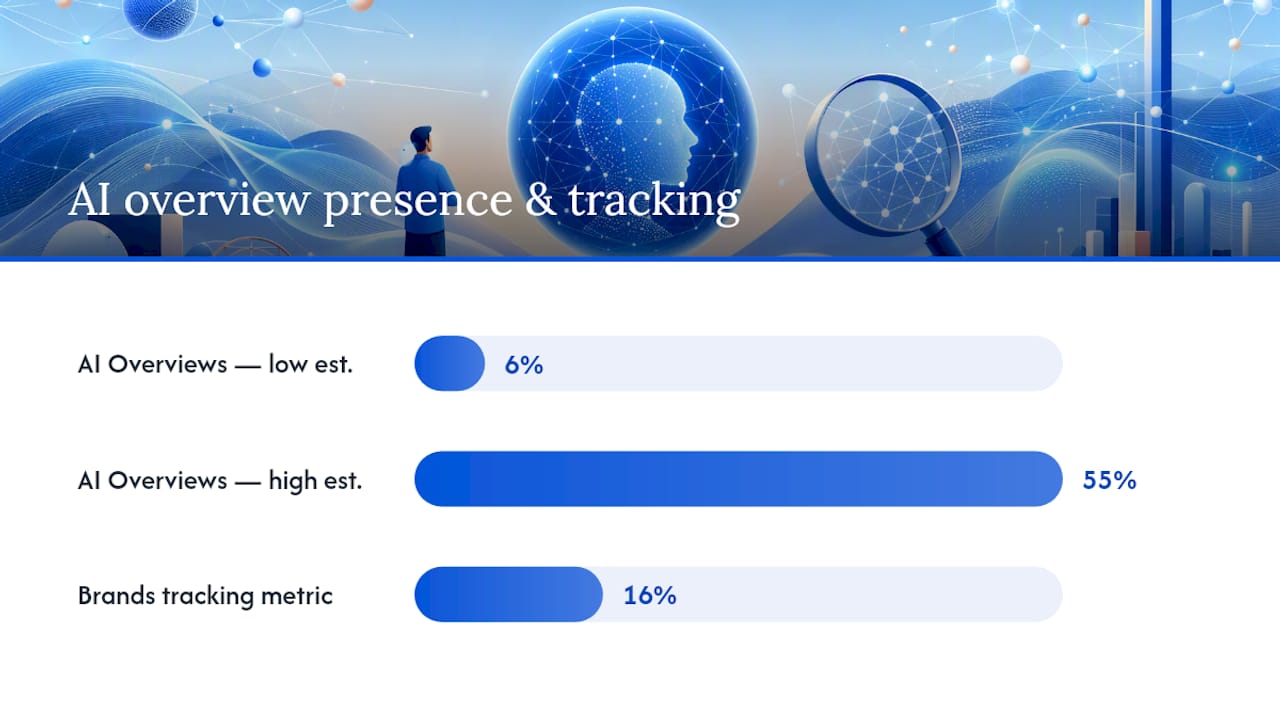
Traditional SEO rewards the page that ranks. AI search rewards the page that gets pulled into an answer built from several sources at once, which means a page ranking #1 in Google can still be invisible in an AI Overview if a competitor’s page is more extractable. Some datasets show AI Overviews now appearing on a wide range of tracked queries (estimates run from 6% to 55% depending on the vertical), and organic click-through rates can drop noticeably when an overview displaces the traditional result list.
What this looks like in practice:
- A local plumbing brand shows up by name in a ChatGPT answer about “best emergency plumbers” but the engine cites a directory site, not the brand’s own page.
- A SaaS company gets cited constantly in Perplexity answers about pricing comparisons, yet is never mentioned by name in the summary text.
- Two competitors with near-identical Google rankings get wildly different AI treatment because one has structured FAQ content and the other doesn’t.
Only a small share of brands track this systematically. Nuwtonic’s summary of McKinsey figures put that number at roughly 16%, which means most of your competitors are flying blind on exactly the metric that increasingly decides who gets clicked.
The Core Metrics You Need to Track
You don’t need a dashboard full of vanity numbers. You need seven metrics, each mapped to a specific business question, and each computable from the same prompt run.
| Metric | Formula | What it tells you |
|---|---|---|
| Mention rate | Mentions ÷ total prompts run | Whether the brand is even in the model’s frame of reference |
| Citation rate | Citations (URL in sources) ÷ total prompts | Whether your own pages are extractable enough to cite |
| First-mention rate | Prompts where you’re named first ÷ total mentions | Positioning strength versus competitors named in the same answer |
| Share of voice | Your mentions ÷ total brand mentions across the category | Competitive standing in the answer space |
| Prompt coverage | Distinct high-intent prompts you appear in ÷ prompt bank size | How much of your buyer’s actual question space you own |
| Sentiment/accuracy | Prompts with correct, favorable framing ÷ total mentions | Whether the model is repeating outdated or wrong information |
| Citation-to-traffic quality | Sessions from AI referral ÷ citations logged | Whether citations are actually converting into visits |
Mention rate and citation rate are the two to watch weekly; the rest are diagnostic layers you pull when something moves. Citation-to-traffic quality matters most because a page can rack up citations that never send a single visitor, which is a different problem than a page with zero citations at all. Cross-reference this against Google Search Console impressions and clicks on the same URL to confirm the AI signal is real and not noise from a ranking fluctuation happening at the same time.
How to Actually Measure This: Sampling, Engines, and Prompt Banks
Measurement only works if the method is repeatable, and repeatability is where most homegrown tracking falls apart. Run the same prompts, the same way, every time, or the data is worthless for spotting trends.
Build a frozen prompt bank first. Write 25 to 50 prompts that mirror what your actual buyers ask: comparison questions, “best X for Y” questions, troubleshooting questions, pricing questions. Freeze the wording. Do not edit prompts between runs, or you lose the ability to compare week over week.
Run them in clean sessions. Personalization and chat history skew results badly. A repeatable pipeline exports the raw answer text and the full sources array for each prompt, logged out or in incognito, with no prior conversation context feeding the model. Automated scraping tools built for this purpose remove the temptation to eyeball results in a logged-in session, which almost always inflates your own visibility.
Cover the engines that matter. At minimum, include ChatGPT, Perplexity, and Google AI Overviews or AI Mode. Add Gemini, Claude, and Copilot if your buyers skew toward Google Workspace or Microsoft 365 environments. Each engine draws from a different retrieval pool, and a single-engine check can miss a majority of the real signal, since AI Overviews and chat assistants often surface completely different sources for the identical question.
Set your cadence. A quick health check is 25 prompts across 3 engines. A rolling program that reports monthly trends needs 50 prompts across 5 engines, sampled weekly so you can average out day-to-day noise rather than reacting to a single bad run.
- Weekly: run the frozen prompt bank across your chosen engines.
- Monthly: aggregate into trend lines for mention rate, citation rate, and share of voice.
- Quarterly: refresh the prompt bank itself as buyer language shifts.
On tooling, you have two real options: API-based automation that hits each engine’s programmatic endpoint where available, or controlled scraping actors that simulate clean sessions and export structured JSON with answers and sources. Either way, export to a spreadsheet or database you control rather than relying on a vendor’s locked dashboard.
Pro Tip: Rerun the exact same prompt set the week you see a sudden citation drop before you assume you lost relevance. Engines change retrieval behavior often, and a rerun across multiple engines usually reveals a source substitution, not an actual ranking loss.
Turning Raw Numbers Into a Prioritized Fix List
Raw visibility data is useless until you sort it into problems you can actually solve, because a low mention rate and a low citation rate call for completely different work.
- Separate presence from representation. If mention rate is near zero, you have a presence problem: the model doesn’t know you exist in this context. If mention rate is healthy but citation rate is low, you have a representation problem: the model knows you but won’t source you, usually because your content isn’t extractable enough.
- Prioritize by intent, not volume. A prompt like “best accounting software for freelancers” matters more than a branded prompt you’d win anyway. Rank your prompt bank by commercial intent and fix the highest-intent gaps first.
- Weight by engine audience. If your buyers overwhelmingly use ChatGPT for research, a citation gap there outranks a gap in Copilot, even if the Copilot number looks worse on paper.
- Cross-check against Search Console. Pull impressions and CTR for the pages tied to your weakest prompts. A page losing clicks in GSC at the same time it’s absent from AI answers is your clearest signal that AI displacement, not a ranking drop, is the real cause. Fix those pages first since the traffic loss is already measurable.
Fixes That Actually Move Mention and Citation Rates
Once you know whether you’re fighting a presence gap or a citation gap, the fix list gets a lot shorter. Presence gaps get solved off-site. Citation gaps get solved on-site.
For presence, the lever is third-party coverage. Earned mentions on other sites, industry roundups, comparison articles, and forum threads often move AI recommendations faster than anything you publish yourself, because most AI citations trace back to third-party sources rather than brand-owned pages. PR outreach, guest contributions, and even a well-placed Reddit thread carry real weight here.
For citations, the lever is extractability. Concrete steps:
- Add Organization schema with a complete
sameAsarray linking your social profiles and authoritative mentions, since structured data increases the odds a model treats your page as a citable source. - Add author markup with real credentials, not a generic “admin” byline.
- Build structured FAQ blocks that answer one question per block in two or three plain sentences. Models lift these almost verbatim.
- Write explicit evidence statements (“X causes Y because Z”) instead of vague marketing language the model can’t confidently attribute.
- Refresh high-value pages on a quarterly cycle. Stale statistics get quietly dropped from citation pools as engines detect fresher sources elsewhere.
Pro Tip: Write one clear, factual sentence per FAQ answer before you write anything persuasive. Models tend to lift the first clean factual sentence they find and ignore the paragraph of framing around it.
Deciding which lever to pull is mostly a matter of reading your own numbers: low mentions push you toward PR and off-site work, low citations push you toward schema and content structure on pages you already own. Practical schema and content examples for local and service businesses show how small structural changes shift citation behavior within a few weeks.
Reporting AI Visibility to Stakeholders Without Losing Them
Stakeholders don’t need your raw prompt logs. They need a one-page view that ties AI visibility to business outcomes, updated on a schedule someone actually owns.
Assign the weekly prompt run to one owner, whether that’s an in-house analyst or a managed vendor, and put it on the calendar the same way you’d schedule a rank-tracking pull. A dashboard that gets built once and never rerun is worse than no dashboard, since it invites decisions based on stale data.
A one-page report should include:
- AI visibility rate (mention rate and citation rate side by side, never merged into one score)
- Share of voice trend over the last four weeks
- Top three prompts that moved, up or down, and why
- Business tie-in: sessions or leads traced back to AI-referral traffic where trackable
A repeatable weekly cadence with a frozen prompt set is what separates a real measurement program from a one-off check that tells you nothing about trend direction. Feed each finding directly into your sprint backlog as a ticket, whether that’s “add FAQ schema to top 10 service pages” or “pitch three industry roundups this quarter,” and track the same prompt set again four weeks later to confirm the fix worked. Reporting templates built around ongoing visibility monitoring make this loop easier to standardize across a marketing team.
Why This Matters and How Mysearchhero Approaches It
Most brands never get past the tracking stage, which is exactly where the gap between visible and invisible brands opens up. Mysearchhero runs measurement, remediation, and reporting as one connected monthly cycle instead of three disconnected projects.
A typical monthly cycle includes:
- A cross-engine prompt run against a maintained prompt bank specific to the client’s category
- Remediation tickets scoped from the mention/citation gap the run reveals, from schema fixes to new extractable content blocks
- Backlink and third-party mention work through Mysearchhero’s publisher network to close presence gaps
- A monthly report showing visibility rate trends alongside the published articles and mentions that moved them
The goal is a done-for-you version of the exact workflow this guide just walked through, run on autopilot every month.
An Editorial Take on Measuring AI Visibility
Most teams treat AI visibility like a vanity metric to check quarterly. That’s backwards. It moves weekly, sometimes daily, as models shift retrieval sources, and a program that samples once a month is already a month behind. Start smaller than you think you need to: run 25 prompts across three engines this week, split the results into mentions and citations, and fix whichever number is worse before touching anything else.
— Mike
Get Measurement and Fixes Handled Every Month
Running weekly prompt sweeps, sorting mention gaps from citation gaps, and shipping schema fixes takes real hours every month, hours most marketing teams don’t have spare. Mysearchhero is the alternative to hiring an agency retainer or building this in-house: one monthly subscription covers the prompt tracking, the schema and content fixes, the third-party mentions through an established publisher network, and a report you can hand straight to leadership.
Each month you get published articles built around the exact gaps your visibility data reveals, backlinks that close presence problems, Reddit mentions in relevant conversations, and social posts that reinforce the same messaging across channels, all delivered without you managing five separate vendors. If you want to see what a managed AI visibility cycle looks like for your business, start with Mysearchhero and get your first prompt run scheduled.
Sources
A few sources go deeper into the mechanics covered here. Apify’s measurement pipeline breakdown walks through exporting raw answers and sources arrays for scoring. Semly Pro’s tracking framework lays out the 25 to 50 prompt baseline in more detail. Nuwtonic’s 2026 optimization guide covers the CTR compression data and third-party citation patterns. DeepSmith’s piece on mentions versus citations is worth reading in full if you’re still merging those two metrics into one score.
- How to measure LLM brand visibility (with real data)
- AI Search Visibility: The 2026 Optimization Guide | Nuwtonic
- AI Citations vs Brand Mentions: What Both Signals Mean | DeepSmith
- Schema
FAQ
What’s the Difference Between a Mention and a Citation?
A mention is your brand named in the AI’s answer text; a citation is the engine linking to your actual URL as a source. You can have strong numbers on one and weak numbers on the other.
How Many Prompts Do I Need to Get a Reliable Reading?
A quick check needs at least 25 prompts across 3 engines; a rolling monthly program should run 50 prompts across 5 engines sampled weekly.
Which AI Engines Should I Track First?
Start with ChatGPT, Perplexity, and Google AI Overviews or AI Mode, since they draw from different retrieval pools and a single-engine check can miss most of the real signal.
Does Schema Markup Actually Improve AI Citations?
Structured data like Organization and FAQ schema makes content easier for models to extract cleanly, which raises the odds your page gets pulled in as a cited source.
Can Mysearchhero Handle This Measurement and Remediation for Me?
Yes. Mysearchhero runs the prompt tracking, schema and content fixes, and third-party mention work as one monthly cycle, with reporting included.