
A citation is a structured mention of your business name, address, and phone number (NAP) on another site; a backlink is a clickable link pointing to a page on your website. For most local small businesses, the right order is to clean up citation consistency first, then pursue a handful of high-quality local backlinks. Note that a citation only acts as a backlink when the listing includes a working link to your site.
TL;DR:
- A citation becomes a backlink only when its listing links to your site; plain text mentions verify details but do not affect your link profile.
- Search your business name and phone number, claim core profiles, correct one canonical NAP version, remove duplicates, and recheck listings quarterly.
- Prioritize Google Business Profile, major review sites, core data aggregators, and local trade listings when correcting business details.
- Google’s local ranking factors include relevance, distance, and prominence, which draws partly on links and reviews; inconsistent details can weaken that signal.
- Links are no longer necessarily among Google’s top three ranking factors, so pursue relevant editorial mentions and avoid paid directory packages and link farms.
Table of Contents
- What a citation is vs what a backlink is
- How citations help local search visibility and prominence
- How backlinks support broader organic rankings and site authority
- When a citation also functions as a backlink
- Steps to create, claim, and keep citations accurate
- Tactical, small-business-friendly backlink strategies
- How a managed pipeline bundles citations and backlinks together
- Fix citations first, then chase the right links
- A managed option if you’d rather not do this alone
- FAQ
- Sources
What a citation is vs what a backlink is
A citation is any mention of your business’s NAP details, whether or not it links anywhere. A backlink is a clickable hyperlink from another page to a specific page on your site.
- Citation examples: a Yelp profile, a chamber of commerce directory entry, a data aggregator record
- Backlink examples: a local news article about your grand opening, a guest post on a partner’s blog, a mention on a supplier’s resource page
The overlap happens when a directory listing includes a website field: that citation becomes clickable and starts to behave like a backlink. Context matters too. A link buried in a directory’s footer carries less weight than one placed inside an editorial story, because search engines weigh links partly on relevance and trust, not just existence.
How citations help local search visibility and prominence
Google states that local results depend mainly on relevance, distance, and prominence, and prominence is shaped in part by how many sites link to your business and how many reviews you have. Citations feed this signal by confirming your business details across the web. When your name, address, or phone number is inconsistent between your website, Google Business Profile, and directories, aggregators can amplify the error instead of correcting it.
Prioritize these platforms first:
- Google Business Profile, since it anchors most local map results
- Major review sites like Yelp and industry-specific directories
- Core data aggregators that feed smaller directories automatically
- Local chamber of commerce or trade association listings
Pro Tip: Run your business name through a search engine in quotes to spot mismatched listings before they spread further.
The basic loop is audit, claim, correct, monitor: find where you’re listed, claim the profiles you don’t control, fix mismatched details, then check back quarterly.

How backlinks support broader organic rankings and site authority
Search engines use backlinks to discover new pages and to gauge how much other sites trust yours, a concept that traces back to the original PageRank model. But the weight of any single link has changed. Gary Illyes, a Google analyst, has said links are no longer necessarily among the “top three” ranking factors, even though they still matter for discovery and trust.
For a local business, a handful of the right links beats a long list of weak ones:
- A story in a local newspaper covering a community event you sponsored
- A listing on a trade association’s member page
- A mention from a supplier or partner business in your area
One of the clearer signals from recent commentary: links have dropped out of the top three ranking factors, which means a handful of relevant, editorially earned links can outperform a large batch of generic ones. For more on which link types carry weight locally, see our guide to backlink types for local SEO.
When a citation also functions as a backlink
Not every citation links back to you. A listing that states your NAP in plain text without a clickable URL is a citation only, still useful for local verification, but it does nothing for your site’s link profile.
- Non-link citation: your business appears in a directory’s text listing with no website field filled in
- Linked citation: the same directory includes a website field, turning the entry into a clickable backlink
- Editorial backlink: a journalist or blogger links to you inside a story, which typically carries more weight than a directory link because of its context and the site’s authority
To audit your listings, open each one and check whether the website field is filled and whether the link actually resolves to the correct page. Keep a simple spreadsheet logging which citations link out and which don’t, so you know where your real backlink count stands.
Steps to create, claim, and keep citations accurate
Start with a full audit: search your business name and phone number, check existing citations for errors, and note every platform where you appear.
- Claim your Google Business Profile, Yelp, Facebook, and the core aggregators first, since these carry the most local weight
- Add structured data (schema markup) to your website so your NAP is machine-readable
- Keep one documented, canonical version of your NAP and use it everywhere, down to abbreviations like “St.” versus “Street”
- Set a quarterly reminder to recheck listings and fix duplicates or outdated third-party entries
Pro Tip: Duplicate listings often outrank your real one. Flag and request removal of duplicates as soon as you spot them, since they split your prominence signal.
Our local SEO best practices checklist walks through this process in more detail, including which free listing sites to prioritize first, a list Clickflame also rounds up well.
Tactical, small-business-friendly backlink strategies
Once your citations are clean, shift effort toward a small number of backlinks that actually move the needle locally.
- Pitch local news outlets or community blogs when you sponsor an event or hit a milestone
- Join trade associations and chambers that list members with a link
- Create an event page on your site that partners or venues can link to
- Offer a resource, guide, or tool that other local businesses want to reference
- Build simple partnerships with complementary businesses for mutual mentions
Prioritize opportunities by local relevance, editorial context, and whether the link could send real visitors, not just link equity. Track outreach in a simple spreadsheet: who you contacted, what you offered, and whether they linked. Skip paid directory packages and link farms. They rarely hold up and can do more harm than good to a small site’s trust profile. Our guide to authority backlink placements covers how to scale this kind of outreach without doing it all manually.
How a managed pipeline bundles citations and backlinks together
A repeatable process for this work usually combines published content, earned backlinks, and brand mentions into one ongoing pipeline rather than treating each as a separate project. One example worth studying is how Reddit threads can turn into durable citation sources over time.
Reddit discussions that gain traction can surface in AI-generated answers and search results well after the original post, turning a single thread into a lasting citation source.
That approach is detailed in our Reddit strategy case study, which walks through how one campaign built momentum from community engagement into search visibility. Whether a managed service or a DIY approach fits better usually comes down to how much time your team has to run audits, outreach, and content publishing consistently every month.
Fix citations first, then chase the right links
The audit-first approach holds up because citation errors are cheap to find and fix, while backlink outreach takes real time and rarely pays off on the first try. Start by measuring what’s broken: listings with wrong NAP data, duplicate profiles, and gaps in major directories. Once that’s clean, track traffic and local query changes as you add a few strong backlinks. Fix the foundation before chasing the harder win.
— Mike
A managed option if you’d rather not do this alone
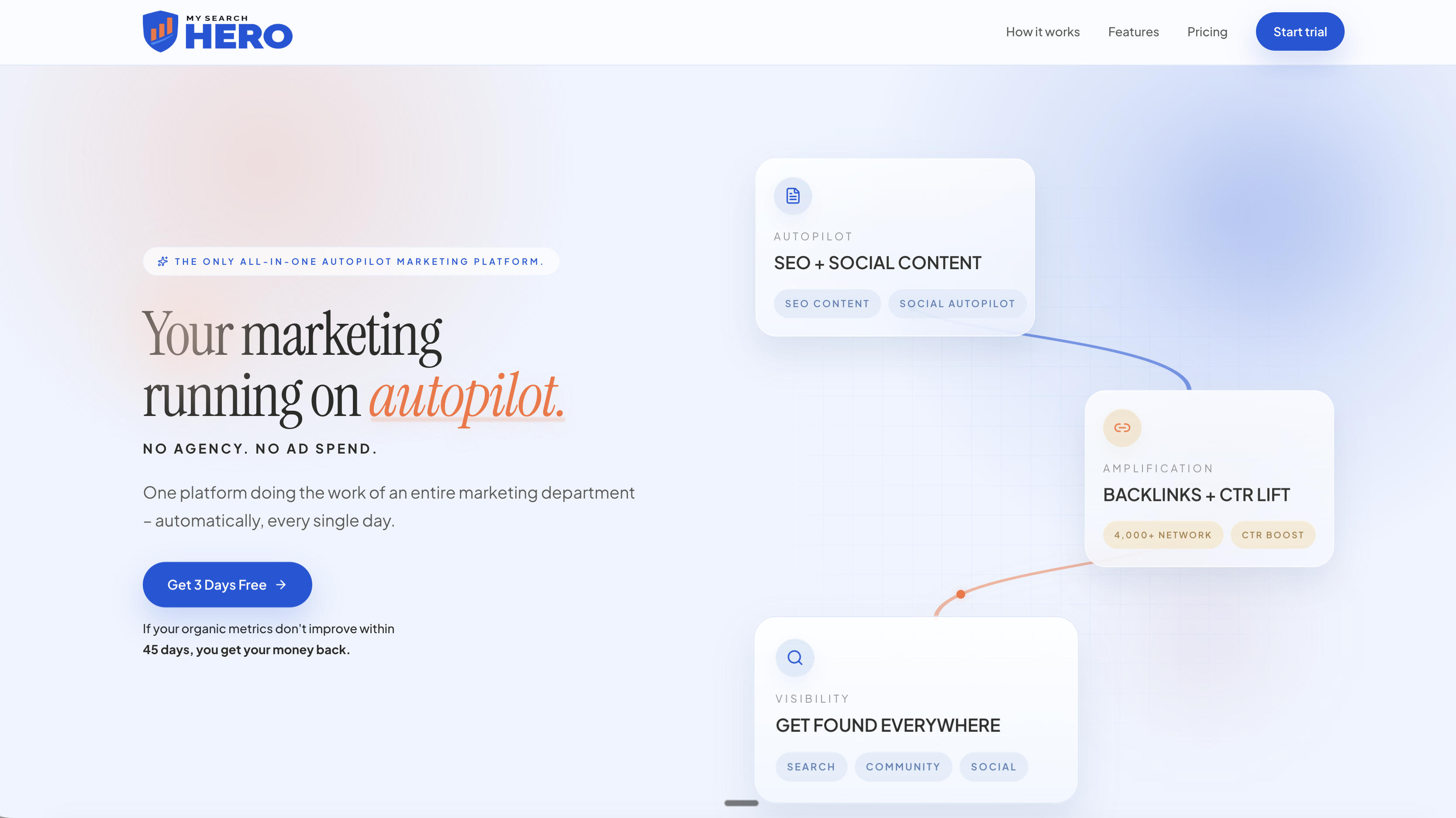
Cleaning up citations and building real backlinks both take consistent monthly effort, which can be managed by subscription services. Each month, SEO articles may be published to your site, authority backlinks built through publisher networks, brand mentions placed on Reddit, and social posts pushed out across platforms, all within one subscription.
- If you have the time and staff to run audits and outreach every month, a DIY approach can work
- If you’d rather have the deliverables show up automatically, our Spark, Authority, Hero, and Enterprise plans cover different levels of monthly output
Check our plans page to see which bundle fits your goals and get started.
FAQ
Are citations the same thing as backlinks?
No. A citation is a mention of your business name, address, and phone number, while a backlink is a clickable link to your site. A citation only becomes a backlink when the listing includes a working website link.
Which should a small business fix first, citations or backlinks?
Start with citation consistency, since Google ties local prominence partly to links and reviews and inconsistent NAP data can undercut that signal before backlinks even come into play. After your core listings are accurate, shift effort to a small number of relevant backlinks.
Do more backlinks always mean better rankings?
Not necessarily. A Google analyst has said links are no longer necessarily a top three ranking factor, and local outreach guidance favors a few authoritative, relevant links over a large volume of weak ones.
How do I know if a directory listing counts as a backlink?
Check whether the listing includes a website field with a working link to your page, not just text mentioning your business name. If the link resolves correctly, log it separately from non-link citations so you can track your actual backlink count.
What’s the fastest way to clean up inconsistent citations?
Search your business name and phone number to find where you’re listed, then claim and correct the highest-traffic platforms first, starting with Google Business Profile and major review sites. A quarterly recheck keeps new errors and duplicates from building back up.
Sources
- Tips to improve your local ranking on Google – Google Business Profile Help
- Links are not a top 3 Google Search ranking factor, says Gary Illyes
- Essential Local Link Building Tactics – Moz