
TL;DR:
- Many businesses underestimate content’s role, viewing it as mere decoration rather than the core driver of brand trust and visibility.
- Prioritizing high-quality, audience-relevant content over volume creates lasting search and brand authority, unlike short-lived paid ads.
Most businesses treat content like a garnish. Something you add to make the main dish look more appealing. The reality is that content is the main dish. Understanding why content matters means recognizing it as the foundation of brand trust, search visibility, and lead quality — not a supporting act for your paid ads. This article breaks down the data, the strategic shifts, and the practical applications that explain why content is crucial for any business serious about sustainable growth in 2026.
Table of Contents
- Key takeaways
- Why content matters for brand visibility and leads
- The shift from volume to content quality
- How content builds trust and customer relationships
- Interactive content and why engagement matters
- Putting content strategy to work
- My honest take on why content outlasts everything else
- Grow your brand with content that actually works
- FAQ
Key takeaways
| Point | Details |
|---|---|
| Content builds brand awareness | 87% of marketers confirm content marketing increases brand awareness more than traditional outreach. |
| Quality now outranks volume | Over 70% of marketers prioritize relevance and depth over producing high quantities of content. |
| Trust compounds with education | Consumers who engage with educational content show measurably higher trust levels after just one week of exposure. |
| Interactive formats lift engagement | Quizzes, calculators, and infographics increase time on page and generate richer audience data. |
| Content filters your best leads | Premium, specific content attracts qualified buyers and naturally deters unqualified prospects. |
Why content matters for brand visibility and leads
The numbers from 2026 are worth sitting with. 87% of marketers report that content marketing has increased their brand awareness, while 76% confirm it generates more qualified leads than other channels. Those are not marginal gains. That is a structural advantage.
The reason is straightforward. When someone finds your article while searching for an answer to a real problem, they arrive with intent. Compare that to a display ad interrupting someone mid-scroll. One of those interactions starts a relationship. The other starts an avoidance habit.
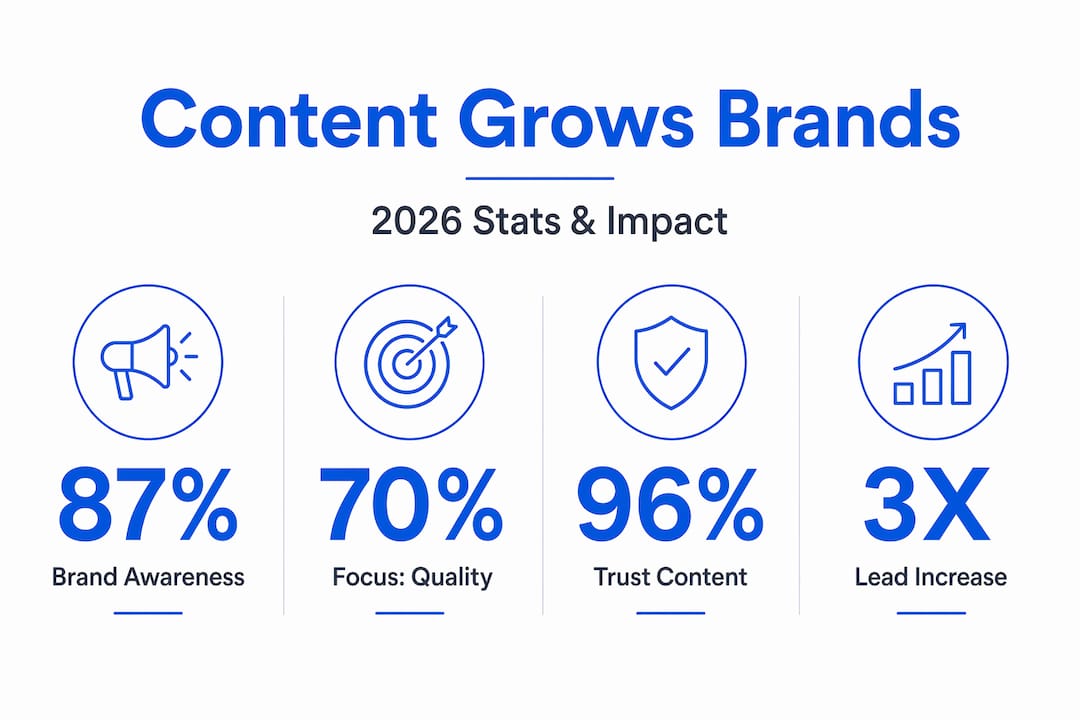
Beyond lead quality, the importance of content becomes even clearer when you compare its ROI curve to paid media. Content marketing compounds over time. An article you publish today can generate traffic, leads, and brand recognition for years. A paid ad delivers results precisely as long as your budget holds, then stops completely.
Here is how content supports different stages of the buyer’s journey:
- Awareness stage: Blog posts, how-to guides, and thought leadership pieces introduce your brand to people who have never heard of you.
- Consideration stage: Case studies, comparison guides, and educational videos help prospects evaluate whether you are the right fit.
- Decision stage: Testimonials, detailed product content, and FAQ pages remove the final objections standing between a prospect and a purchase.
Pro Tip: Build content at each of these stages intentionally. Most businesses over-invest in decision-stage content and ignore awareness-stage content entirely, which cuts off the top of the funnel.
The shift from volume to content quality
For years, the content playbook was simple: publish more, rank more. That era is over. Over 70% of marketers now prioritize content quality and audience relevance over production volume. The strategic shift is not subtle, and the forces driving it are real.
AI tools have made it cheaper than ever to produce large amounts of generic content. The result is a web flooded with undifferentiated articles that answer surface-level questions without authority or depth. Search engines have responded. Businesses investing in expert-led content are seeing better search rankings and stronger brand trust precisely because authoritative content stands out against the noise.
Search engines now evaluate brand reputation and user trust signals as part of how they rank content. Generic articles with no clear authorship or expertise perspective are losing ground. Content that demonstrates genuine knowledge, cites real data, and reflects a credible editorial voice is gaining it.
What does this look like in practice? A small business content guide worth publishing is not 500 words of surface-level tips. It covers the subject with enough depth that a reader finishes it knowing something they did not know before.
Pro Tip: Before publishing any piece of content, ask yourself one question: Does this contain at least one insight, data point, or perspective the reader cannot find in the first three Google results? If not, it is not ready.
How content builds trust and customer relationships
The trust gap between content and advertising is wider than most marketers realize. 96% of buyers distrust standard ads. Meanwhile, 64% trust brands that produce educational content, and that number rises to 73% one week after initial exposure.

That trajectory matters. Trust does not spike immediately when someone reads a single article. It accumulates. Every piece of educational, transparent content you publish adds to the reputation bank your brand is building with your audience.
Content as a communication tool works because it shifts the dynamic between brand and consumer. Advertising says, “Buy from us.” Educational content says, “Here is something useful.” That second posture earns trust in a way that no ad spend can replicate.
Here is what relationship-driven content actually looks like in practice:
- Transparent how-to content that honestly addresses the trade-offs of a product or service, not just the benefits
- Expert Q&A pieces where your team answers real questions your customers are asking
- Behind-the-scenes content that shows the people and process behind your brand
- Data-driven insights specific to your industry that position your brand as a genuine authority
The compounding effect here is significant. A prospect who reads three of your articles before reaching out already trusts you more than one who clicked an ad. They take less convincing, negotiate less aggressively, and tend to become better long-term customers. The role of content in branding is not decorative. It is the mechanism through which your brand becomes genuinely credible.
Interactive content and why engagement matters
Not all content engages equally. There is a meaningful gap between content a reader skims in 45 seconds and content they actively participate in. Interactive formats close that gap.
Interactive content improves engagement metrics like time on page and conversion rates by promoting active user participation. When a reader answers a quiz, adjusts a calculator, or clicks through an interactive infographic, they are committing attention in a way that passive reading rarely produces. That commitment translates into stronger brand recall and higher intent signals.
There is also a data advantage. Interactive content collects detailed user interaction data that passive content simply cannot. A quiz that helps a prospect identify their marketing gap tells you exactly where that prospect is in their journey and what they care about most. That is richer insight than a page view.
The most effective interactive content formats to consider:
- Quizzes that help prospects self-diagnose a problem and position your brand as the natural solution
- ROI calculators that make the business case for your product or service concrete and specific
- Interactive infographics that let users explore data relevant to their specific situation
- Assessment tools that benchmark a prospect’s current performance and suggest improvement paths
You can see how engaging content formats directly feed into stronger SEO performance as well. Longer time on page, lower bounce rates, and higher social sharing all send positive signals to search algorithms.
Pro Tip: You do not need to build complex tools to get the benefits of interactivity. A simple embedded quiz or a downloadable assessment template can produce the same engagement lift as a custom-built calculator.
Putting content strategy to work
Understanding the benefits of quality content is one thing. Building a system that produces it consistently is another. Here is where business owners and marketers often get stuck: they know content matters, but production stalls because there is no clear plan behind it.
Start with audience and goal clarity before you write a single word. Who is this content for, specifically? What do you want them to do after reading it? Vague goals produce vague content that connects with no one.
Evergreen content deserves a dedicated place in your content calendar. These are pieces that answer questions your audience will ask in 2026 and again in 2028. A well-researched guide on a foundational topic in your industry earns authority and traffic long after publication. Contrast that with trend-chasing content that has a shelf life measured in weeks.
| Content type | Best use case | Time investment |
|---|---|---|
| Evergreen guides | Long-term SEO and trust-building | High upfront, lasting returns |
| Case studies | Decision-stage conversion | Medium, requires client input |
| Interactive tools | Engagement and lead qualification | High, but produces rich data |
| Social content | Awareness and community building | Low per piece, high consistency needed |
| Video explainers | Consideration and education | Medium to high depending on production |
Content marketing examples that actually attract local clients share one trait: they are built around a specific audience’s specific problems, not general topics chosen for convenience.
Finally, measure what matters. Traffic is vanity unless it converts. Track which content pieces generate leads, which ones attract the right audience, and which ones produce the longest engagement times. Use that data to refine what you produce next.
My honest take on why content outlasts everything else
I have worked with enough businesses to know how this conversation usually goes. They come in focused on paid ads because the feedback loop is fast. You spend money, you see clicks. Content feels slower, harder to measure, and harder to justify in a quarterly review.
What I have seen over time is that the businesses investing seriously in content build something paid media simply cannot buy: accumulated brand authority. An article that ranks well, earns backlinks, and gets shared in industry communities works around the clock without additional spend. That is genuinely rare in marketing.
The mistake I see most often is treating content as a separate function from the core business strategy. Companies publish blog posts because “you’re supposed to,” not because they have a clear picture of who they are writing for and what that reader should do next. Content without strategic intent is just noise.
My honest advice: publish less, but publish better. One article that genuinely serves your audience and demonstrates real expertise will do more for your brand than ten generic posts assembled to hit a monthly quota. The content marketing significance most businesses are missing is not about volume. It is about whether your content earns the trust of the person reading it.
— Mike
Grow your brand with content that actually works
If this article made one thing clear, it is that content is not something you do on the side. It is the primary mechanism through which your brand earns visibility, trust, and qualified leads. The problem for most business owners and marketers is execution. Strategy is clear. Time and resources are not.
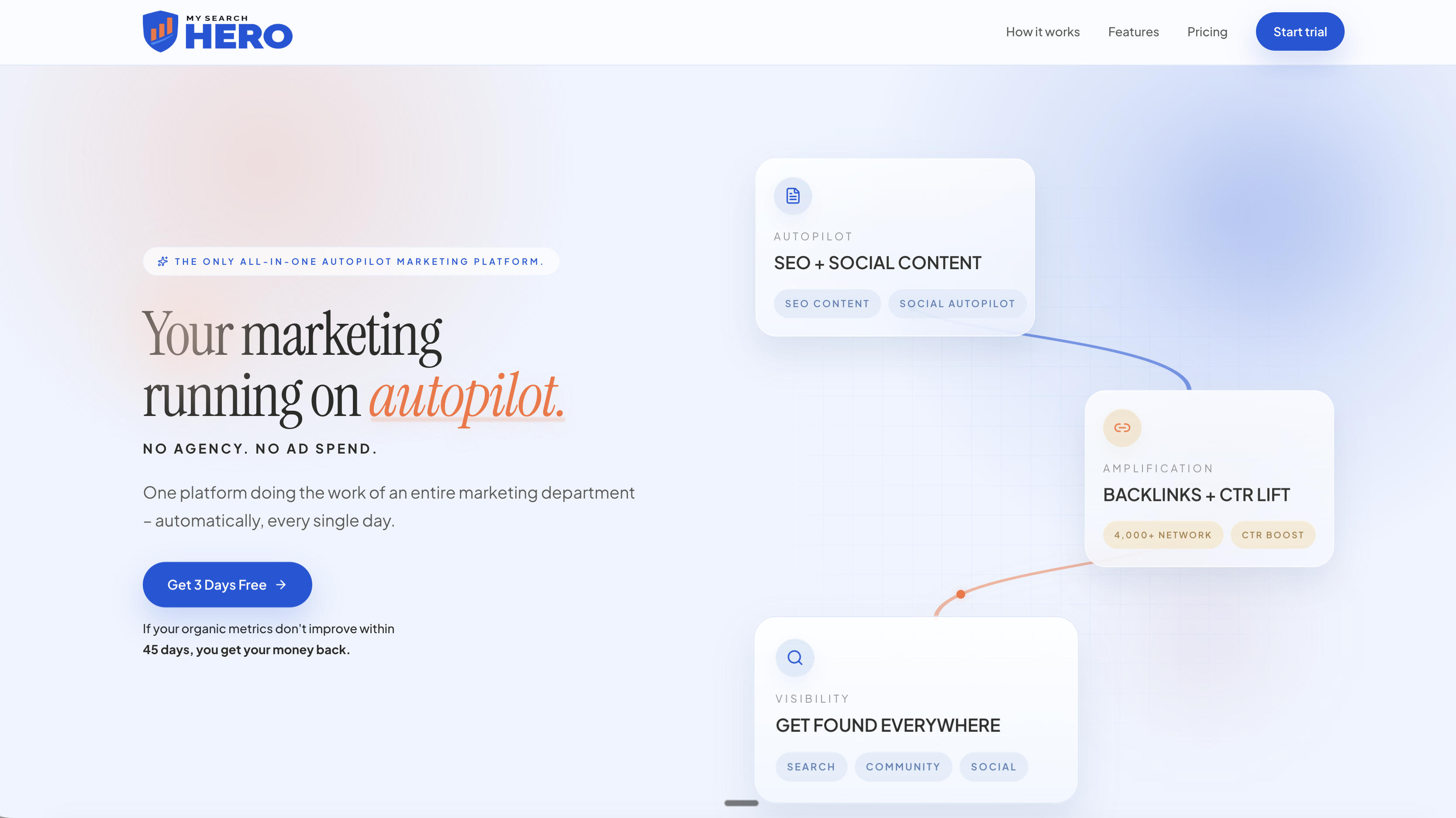
Mysearchhero is built specifically for this problem. Each month, subscribers receive a full bundle of content deliverables: published articles, backlinks, Reddit mentions, and social media posts, all pushed through an automated pipeline that keeps your online presence growing without consuming your schedule. You get the benefits of a full content marketing operation without the overhead of managing one. If you are ready to build content that compounds over time, explore Mysearchhero and see how the done-for-you model works in practice.
FAQ
Why does content matter more than paid advertising?
Content builds trust and compounds in value over time, while paid ads stop delivering results the moment your budget ends. 96% of buyers distrust standard ads, while educational content consistently earns higher trust scores.
How does content quality affect search rankings?
Search engines now factor in brand reputation and user trust signals when ranking pages. Publishing expert-led, credible content improves both authority and visibility in ways that high-volume, low-quality content cannot.
What types of content generate the most qualified leads?
Specific, premium content that addresses a targeted audience’s real problems tends to attract the most qualified buyers. Tailored content filters naturally, drawing in high-intent prospects and deterring those who are not a good fit.
How long does it take for content marketing to show results?
Content marketing builds gradually, but its value compounds. Most businesses see measurable SEO and lead generation improvements within three to six months, with returns continuing to grow as content earns authority and backlinks over time.
What is the role of interactive content in a content strategy?
Interactive content like quizzes and calculators increases time on page, improves conversion signals, and collects rich audience data. It is one of the most effective ways to convert passive readers into engaged prospects.